When patients book a Registered Massage Therapy session, most are surprised to learn that “RMT massage” is not a single technique — it’s a clinical toolkit of more than ten distinct manual-therapy modalities, and a skilled therapist blends several within a single session based on what the body in front of them actually needs. This guide walks through 10+ massage techniques the team at Artemis Wellness Clinic uses, what each one is typically used for, and how to know which one is right for you. Artemis Wellness Clinic sits at 5911 No. 3 Rd #130, Richmond, BC V6X 0K9 — steps from Brighouse SkyTrain — and you can phone 604-242-2233 or book online at artemis.janeapp.com. For the broader practice context, see our Richmond RMT services overview.
The 10+ Techniques Our Richmond RMT Team Uses
1. Swedish Massage — Relaxation and Circulation
Swedish massage is the foundation modality every Registered Massage Therapist learns first. It uses long flowing strokes (effleurage), kneading (petrissage), and rhythmic tapping at light-to-medium pressure to improve surface circulation, downregulate the nervous system, and reduce general muscle tension. Swedish is the right choice when the goal is stress relief, parasympathetic recovery, or general wellness rather than addressing a specific pain pattern. It’s also the most appropriate baseline for first-time massage patients who want to learn how their body responds to manual therapy before exploring more focused work.
2. Deep Tissue Massage — Chronic Tension
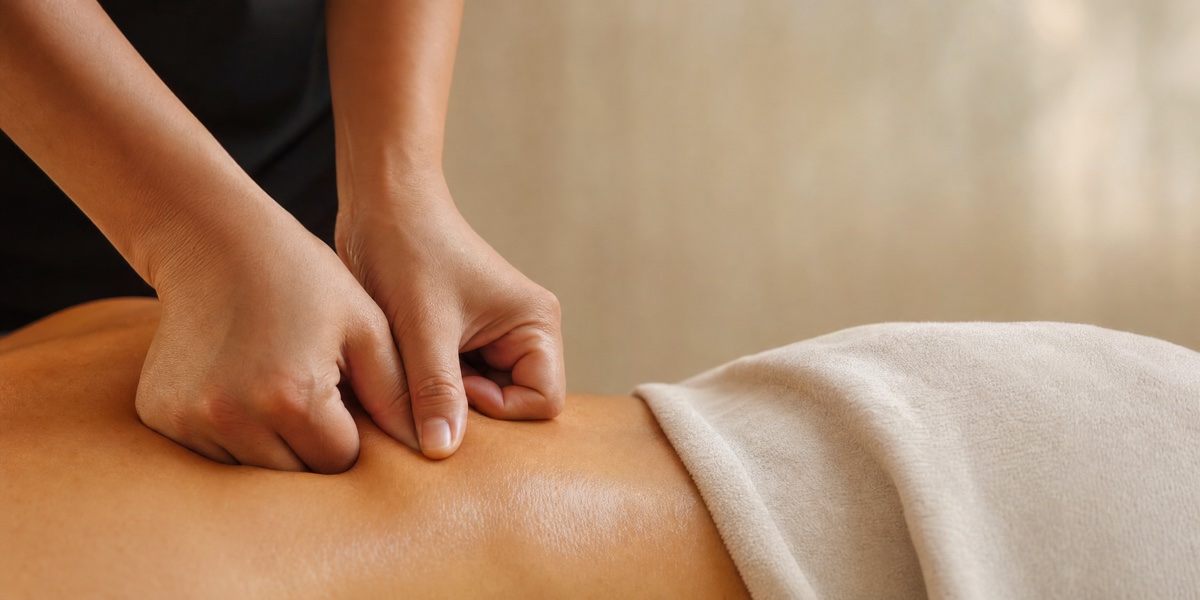
Deep tissue work targets the deeper layers of muscle and fascia using slow, sustained pressure to release adhesions rather than just compress tissue. It’s the modality of choice for chronic upper-trap, low-back, hip, or shoulder tightness that hasn’t responded to lighter approaches, and for athletes in maintenance phases who need more than relaxation work. Sessions feel like a “productive ache” rather than sharp pain, and most patients are slightly sore for 24-48 hours afterwards, similar to the day after a hard workout. For the full clinical breakdown, see our deep tissue guide.
3. Sports Massage — Pre/Post Event and Maintenance
Sports massage is sport-context-aware: stroke pace, depth, and timing are adjusted for whether the patient is preparing for an event, recovering from one, or in a base training block. Pre-event work is typically faster-paced and focuses on circulation and joint preparation; post-event work is slower and addresses recovery, lactate clearance, and muscle reset; maintenance work blends both with a focus on sport-specific movement patterns. Runners, cyclists, hockey players, and weekend warriors at Artemis often book sports massage as part of an ongoing rotation alongside deep tissue or trigger-point work.
4. Trigger Point Therapy — Focal Pain and Referrals
Trigger points are small, hyper-irritable spots in muscle that can refer pain to seemingly unrelated areas — for example, an upper-trap trigger point referring pain to the temple as a tension headache. Trigger point therapy applies sustained, direct pressure to these palpable spots until they release, then follows with stretching or movement to reset the surrounding tissue. This modality is often used for chronic tension headaches, jaw pain, and persistent shoulder or hip pain that “moves around” — patterns that typically reflect referral, not local injury.
5. Myofascial Release — Wider Fascial Restriction Patterns
Where deep tissue targets specific muscles, myofascial release works the connective tissue (fascia) that wraps and links muscle groups across wider planes. The technique uses slow sustained holds with broader hand contact rather than focal pressure. Patients with whole-system stiffness — for instance, pelvic restriction that’s pulling on low back, hamstrings, and shoulders all at once — often respond better to myofascial work than to single-region deep tissue, because the underlying fascial chain is the driver. Many sessions blend the two.
6. Cupping — Silicone and Glass
Cupping uses negative pressure (suction) to lift and mobilize tissue rather than compress it — the opposite mechanical input from most massage strokes. The team at Artemis uses both silicone cups (softer, easier to glide for moving cupping) and glass cups (firmer suction for stationary work on stubborn adhesions). Cupping is often used for IT band restriction, thoracic-spine mobility, and chronic shoulder adhesions where direct pressure has plateaued. The temporary circular marks that can result are not bruises in the classical sense — they’re stagnation patterns that typically resolve in 3-7 days.
7. Hot Stone — Relaxation and Warmth Penetration
Hot stone massage uses smooth, heated basalt stones placed on or glided across the body. The heat penetrates deeper than the therapist’s hands alone, allowing the surrounding muscle to release at a lower pressure level. This makes hot stone an excellent choice for patients who want depth without intensity — for example, stressed-out desk workers who need real tension relief but find deep tissue too aggressive. It’s also a popular choice in colder months when whole-body warmth is part of the therapeutic value.
8. Pregnancy / Prenatal Massage — Available With Appropriate Positioning
Prenatal massage is available at Artemis with appropriate positioning and modality adjustments — side-lying or semi-reclined positions, gentler pressure, and avoidance of contraindicated areas. Specific scope and certification varies by therapist, so prenatal bookings are matched to the right RMT on the team rather than assumed to be available with any RMT. If you’re pregnant, mention your trimester and any pregnancy-specific concerns at booking so we can match you with the appropriate therapist and session length.
9. Lymphatic Drainage — Post-Surgical Swelling and Fluid Clearance
Manual lymphatic drainage uses very light, rhythmic strokes that follow the lymph system’s pathways to support fluid clearance. It’s commonly indicated post-surgical (with surgical clearance) to help reduce swelling, and it’s used as supportive care for patients with chronic lymphatic congestion. Lymphatic work is light by design — patients sometimes ask “is this really doing anything?” because it doesn’t feel like a typical massage. It is, but the mechanism is fluid movement, not muscle release.
10. Active Release / IASTM — Instrument-Assisted Soft Tissue Work
IASTM (Instrument-Assisted Soft Tissue Mobilization) uses smooth metal or plastic tools to glide along tissue and identify or release adhesions and scar tissue. It’s often used for tendinopathies (tennis elbow, achilles, plantar fascia), post-surgical scar mobilization, and stubborn fascial restrictions where the therapist’s hands have plateaued. Active release techniques apply specific tension to a muscle while the patient moves through a controlled range of motion, integrating release with neuromuscular re-patterning.
11. Cranial-Sacral / Craniosacral — Light Touch, Parasympathetic
Craniosacral therapy uses very light contact (often just the weight of the hands) applied to the head, sacrum, and along the spine to support the central nervous system into a parasympathetic state. It’s a gentle modality that some patients find profoundly calming, particularly those with chronic stress, post-concussion symptoms (with appropriate clearance), or autonomic dysregulation. Specific craniosacral training varies by therapist; if it’s a primary interest, please ask at booking so we match you with the right team member.
How to Choose the Right Technique
A short decision matrix patients can use as a starting point:
- Chronic muscle pain or tightness that hasn’t budged → deep tissue + cupping, often with trigger point
- Pure stress relief, relaxation, recovery from a hard week → Swedish or hot stone
- Athletic performance and recovery → sports massage + trigger point, with deep tissue in maintenance phases
- Pregnancy → prenatal modifications, matched to the appropriate therapist
- Post-surgical swelling or compromised lymph flow → lymphatic drainage (with surgical clearance)
- Tendinopathy or stubborn scar tissue → IASTM or active release
- Whole-system stiffness, fascial chain patterns → myofascial release, often blended with deep tissue
- Stress-driven autonomic symptoms, headaches, sleep issues → craniosacral (where appropriate) or trigger point + Swedish
This is a starting matrix, not a prescription — the actual technique mix is decided at intake by the RMT working with you.
Most Sessions Are a Blend
In practice, very few sessions use only one technique. A typical 60-minute session for a chronic-tension patient might open with 10 minutes of Swedish to warm the tissue and downregulate the nervous system, move into 30 minutes of deep tissue on the priority regions identified at intake, integrate 10 minutes of cupping or trigger point work on the most stubborn adhesions, and close with 10 minutes of integration strokes plus stretching guidance. The RMT chooses the blend at intake based on your history, current symptoms, and goals — that clinical judgment is the value a Registered Massage Therapist adds beyond technique execution. To learn more about how the team decides, see our Dave Tam our RMT Director profile.
Insurance and ICBC Billing — Same Code Regardless of Technique
Every technique above is within RMT scope of practice and is billed identically — there is no separate fee for cupping vs. Swedish vs. deep tissue, and ICBC, WorkSafeBC, and extended health plans do not differentiate by modality. A 60-minute RMT session is a 60-minute RMT session whether it includes cupping or doesn’t. For specifics on out-of-pocket cost, plan acceptance, and direct-billing logistics, see our Richmond RMT direct billing cost guide.
Booking Your Session
To book any of these techniques at Artemis Wellness Clinic — 5911 No. 3 Rd #130, Richmond, BC V6X 0K9, steps from Brighouse SkyTrain — phone 604-242-2233 or book online at artemis.janeapp.com. You don’t need to know which technique you want before booking — that’s what the intake conversation is for. Just describe what’s going on (chronic pain, stress, athletic recovery, post-surgical, pregnancy, etc.) and your therapist will design the session accordingly.
Frequently Asked Questions
Which technique should I choose for my first session?
If you’re not sure, book a 60-minute general RMT session and describe what’s happening at intake. Your therapist will design the technique mix — most first sessions blend Swedish (to assess tissue response) with one focused modality (deep tissue, trigger point, or whatever fits your presentation).
Can I request a specific technique?
Yes. If you’ve responded well to cupping in the past, or you specifically want lymphatic drainage, or you want hot stone for a pure relaxation session — say so at booking and we’ll match you to the appropriate therapist and session length.
Do all your RMTs do all of these techniques?
Most of the team is trained across the foundation modalities (Swedish, deep tissue, sports, trigger point, myofascial). Specialized modalities — prenatal positioning, craniosacral, lymphatic drainage, IASTM — vary by therapist’s specific training. Mention any specialized request at booking so we match you correctly.
Will any of these techniques hurt?
Deep tissue, trigger point, and IASTM produce a “productive ache” sensation that should feel like progress, not sharp pain. Swedish, hot stone, lymphatic, and craniosacral are gentle by design. Cupping creates a pulling sensation that most patients describe as relieving rather than painful. Communicate during the session — every technique can be adjusted in real time.
Can I switch techniques mid-session?
Yes. If something isn’t landing the way you’d hoped, tell the therapist — they’ll adjust the approach. Massage is interactive, not a fixed protocol.
Are some techniques more “evidence-based” than others?
The research base is strongest for Swedish, deep tissue, sports massage, and trigger point therapy. Cupping, IASTM, and craniosacral have a smaller but growing evidence base. Lymphatic drainage has strong evidence for specific post-surgical indications. We’re transparent about this — if a modality is being used in a primarily supportive or comfort role rather than a primary clinical role, your therapist will say so.
Does ICBC cover all of these techniques?
Yes. ICBC’s Enhanced Care benefit covers RMT sessions; the specific technique used within the session is at the RMT’s clinical discretion.
Do I need to prepare anything before my session?
Wear comfortable clothing, hydrate normally, and avoid heavy meals in the hour before your appointment. If it’s your first visit, arrive 10 minutes early to complete intake paperwork — or fill it out online via the booking link to save time.
Book Your Richmond RMT Session
For any of the Richmond RMT techniques described above at Artemis Wellness Clinic — 5911 No. 3 Rd #130, Richmond, BC V6X 0K9 (steps from Brighouse SkyTrain) — book online at artemis.janeapp.com or call 604-242-2233. Direct billing for ICBC, WorkSafeBC, Pacific Blue Cross, Sun Life, Manulife, Canada Life, and Green Shield Canada. For the full clinic context see our complete clinic guide and Dave Tam our RMT Director spotlight.