Cupping has become one of the most-asked-about treatments in our Richmond clinic — partly because of the visible round marks Olympic athletes wore on their backs in recent years, and partly because patients with stubborn muscle tension are looking for something beyond standard massage. Cupping is not a fad. It is a 2,000-year-old technique within Traditional Chinese Medicine that has earned a place in modern integrative practice for specific patterns of pain and tension. At Artemis Wellness Clinic, cupping is offered by both our registered acupuncturists and our registered massage therapists, depending on the goal of the session. We are located at 5911 No. 3 Road #130, two minutes from Brighouse SkyTrain Station, with direct billing to ICBC and most major extended health plans. Book at Jane App or call 604-242-2233.
What Is Cupping Therapy?
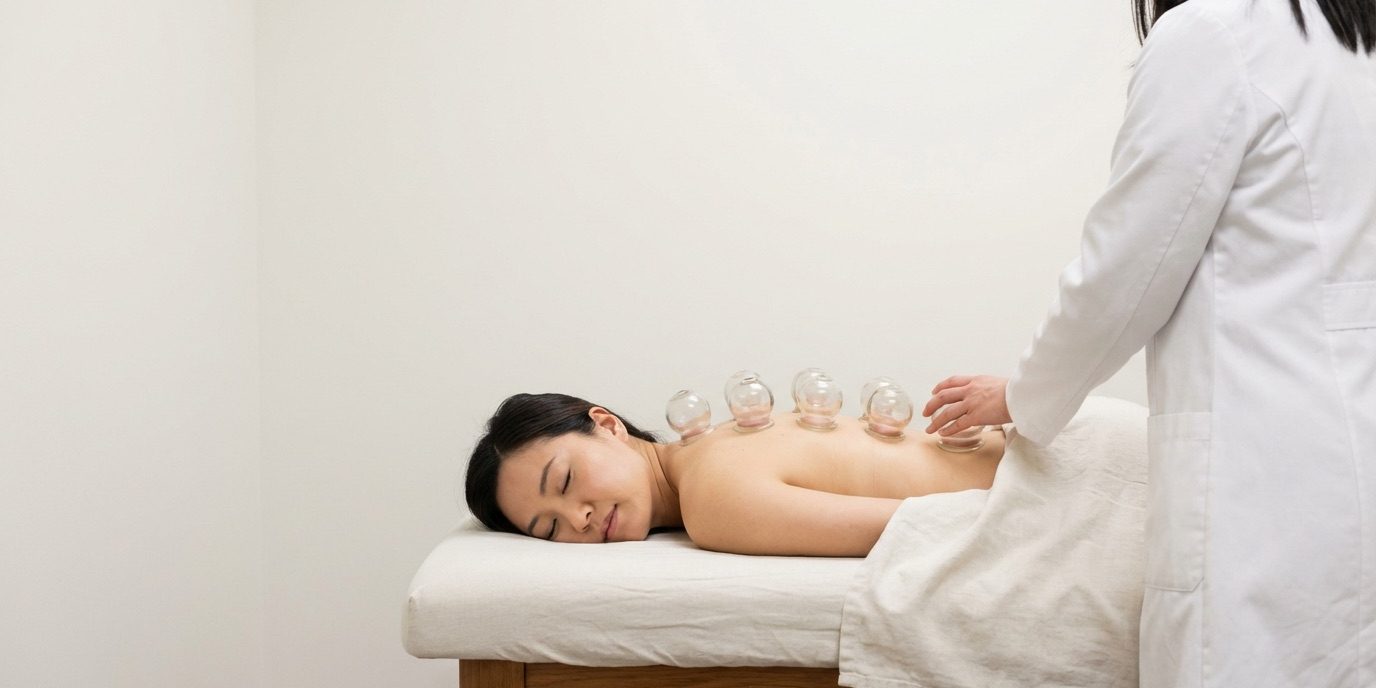
Cupping uses small cups — traditionally glass, increasingly silicone or plastic — placed against the skin and drawn into negative pressure (suction). The suction lifts the skin and underlying fascia upward, creating space and increasing local blood flow in tissues that are usually compressed.
Two broad categories are commonly used in BC clinics:
Stationary cupping (dry cupping). Cups are placed on tight or restricted areas and left for 5–15 minutes. This is the technique most associated with the round circular marks. Suction is created either by a small hand pump (silicone/plastic cups) or by briefly heating the air inside a glass cup with a flame, then immediately placing it on the skin (no fire ever touches the body).
Moving (sliding) cupping. A light oil is applied to the skin, and a cup with moderate suction is glided across larger muscle areas — often along the back, shoulders, or thighs. This produces less marking and feels closer to a deep, broad massage.
Less commonly, wet cupping (Hijama) involves controlled superficial skin nicks before applying the cup. This is not part of standard practice at Artemis.
The “marks” left after a session are not bruises in the traumatic sense. They are localized capillary release patterns and typically fade in 3–10 days. Their colour and persistence give clinical information about the underlying tissue state.
How Does Cupping Work?
The mechanisms of cupping are still being studied, but several effects are well documented:
- Negative pressure decompression of restricted fascia and muscle, which is the opposite of compressive techniques like deep tissue massage
- Local blood flow increase under and around each cup, supporting tissue oxygenation and metabolic clearance
- Myofascial release as the lifted tissue allows fascia to slide more freely against underlying structures
- Parasympathetic nervous system activation in many patients, producing the deeply relaxed feeling often described after sessions
- Potential modulation of inflammatory markers in some research, particularly for chronic musculoskeletal pain
For our purposes in the Richmond clinic, cupping is rarely used in isolation. It is most often integrated within an acupuncture or massage session for patterns where compressive techniques have plateaued.
Conditions That Respond Well to Cupping
Not every painful condition benefits from cupping. The patterns we treat most often at our Richmond clinic include:
- Chronic upper-back, shoulder, and neck tension — particularly the dense ropey patterns that return within days of a deep-tissue massage
- Lower-back stiffness in office workers and drivers, often combined with sciatic-type referral patterns
- IT band and lateral hip tightness in runners and cyclists
- Sports recovery between training sessions, especially for the lower back, hamstrings, and calves
- Tight, restricted scar tissue from old injuries or post-surgical adhesions (after the wound has fully healed)
- Respiratory tension — between the shoulder blades, where chronic stress and shallow breathing concentrate
- Frozen shoulder recovery phase, in combination with mobility work
Cupping is also a common adjunct in TCM for non-musculoskeletal conditions — early-stage colds, certain digestive patterns — but the strongest evidence base is for musculoskeletal pain.
Cupping at Artemis — Two Pathways
How cupping fits into a session depends on which discipline you book.
Within an Acupuncture / TCM Session
Our registered acupuncturists, led by Mandy Tam (R.Ac), use cupping as part of a TCM treatment plan. A typical session may combine 20–30 minutes of needling with 5–15 minutes of cupping on selected areas. This is the traditional context — cupping was developed inside TCM and remains best understood as part of that broader system. Read our Acupuncture and TCM service page for the full scope.
Within an RMT Massage Session
Our registered massage therapists are trained to use cupping as one of several manual techniques during a massage session. RMT-delivered cupping tends to be more movement-oriented (sliding cupping over larger areas) and integrates with deep tissue, myofascial release, and stretching within the same hour. This is often the better fit for sports recovery and postural patterns where the goal is functional movement, not constitutional rebalance.
Choosing Between Them
For chronic systemic patterns — long-term stress, immune support, fatigue with muscle tension — start with acupuncture. For sport-specific recovery, postural pain, or as part of an injury rehabilitation plan, start with RMT. Either practitioner will tell you if you would benefit more from the other.
Insurance and Direct Billing
Cupping at Artemis is delivered by registered acupuncturists or registered massage therapists, which means it is covered under standard benefits across most plans:
- ICBC — covered when delivered by an RMT or registered acupuncturist as part of your motor-vehicle-accident treatment plan. We bill ICBC directly under your claim number — no out-of-pocket cost for pre-approved sessions. Read more about ICBC acupuncture coverage in Richmond.
- Pacific Blue Cross, Sun Life, Manulife, Green Shield Canada, Canada Life — direct billed when your plan includes RMT or acupuncture coverage.
- WorkSafeBC — covered for workplace injuries with an open claim and approved treatment plan.
Note that “cupping” is not a separate billable line on most insurance plans — it is included within the RMT or acupuncture session fee. Your front-desk team can confirm your specific plan before booking.
What to Expect at Your First Cupping Session
- Arrive 10 minutes early to complete intake forms (or fill them in advance through online booking).
- Brief assessment (5–10 minutes). Your practitioner will ask about your symptoms, goals, and any contraindications (pregnancy, blood thinners, certain skin conditions). They will explain what cupping will look and feel like.
- Treatment. You will lie face-down on the heated table, draped throughout. The areas being cupped are exposed; the rest stays covered. You will feel a strong pulling sensation during application that settles into a steady, often pleasant pressure within a minute. Sessions typically include 5–15 minutes of cup contact within a 60-minute visit.
- Aftercare (5 minutes). Brief discussion of what was found, what the marks indicate, and how to care for the area over the next few days.
It is normal to feel slightly warm, lightly fatigued, or unusually relaxed for several hours after a cupping session. Drink extra water, avoid intense exercise for 24 hours, and let the marks be — they are part of the treatment effect, not a side effect to mask.
How Many Sessions Will I Need?
This depends on the pattern being treated:
- Acute muscle tension (a few weeks of pain following a clear trigger): often resolves in 2–4 sessions over 2–4 weeks.
- Chronic postural patterns (months or years of recurrent tightness): typically 4–8 sessions across 6–10 weeks, then maintenance.
- Sports performance and recovery: many patients book monthly during heavy training cycles.
- TCM constitutional patterns: discussed individually within an acupuncture care plan.
For ICBC patients, frequency is set within your approved treatment plan.
Frequently Asked Questions
Will cupping leave marks? How long do they last?
Most stationary cupping sessions leave round circular marks ranging from light pink to deep purple. They are not bruises in the painful sense — most patients feel no tenderness in marked areas. They typically fade in 3–10 days. Sliding cupping leaves much less marking. If you have an event coming up where you would prefer no marks, mention it at booking and your therapist will adjust technique and pressure.
Does cupping hurt?
The initial suction pull can feel intense for the first 30–60 seconds, then settles into a sensation most patients describe as deep pressure or “stuck” — not painful. If pressure ever pushes past comfort, your practitioner adjusts immediately. Sliding cupping feels closer to a firm massage stroke.
Do I need a doctor’s referral?
No. Acupuncture and registered massage therapy in BC are direct-access — book without a referral. ICBC and WorkSafeBC patients should have an open claim number.
Do you direct bill ICBC and extended health?
Yes. For ICBC, we bill directly under your claim number with no payment required from you for pre-approved sessions. For extended health (Pacific Blue Cross, Sun Life, Manulife, Green Shield, Canada Life), we direct bill where your plan supports it.
Is it safe during pregnancy?
Cupping during pregnancy requires modified placement — abdomen and lower back are typically avoided, and care is taken with intensity. Always disclose pregnancy at intake. Acupuncturists trained in obstetric work can adapt safely; ask at booking.
Are there reasons not to have cupping?
Active infection in the treatment area, deep-vein thrombosis, severe varicose veins in the cupping area, advanced osteoporosis, certain blood disorders, very thin or fragile skin, and active anticoagulant use are contraindications or require modification. Always disclose health conditions and medications at intake.
Can I shower after cupping?
Yes — but skip very hot showers, hot tubs, and saunas for 24 hours. Warm showers are fine. Avoid direct ice or cold packs on the marked areas for the first day.
How is cupping different from gua sha?
Both are TCM techniques that work on the surface tissue, but they apply force differently — cupping uses suction (lifting away from the body), gua sha uses gliding pressure with a smooth-edged tool (pressing into the body). They produce different mark patterns and different sensations. Some sessions combine both.
Do you have evening or weekend appointments?
Yes. Real-time availability shows in our Jane App booking page.
Book Cupping Therapy in Richmond
Artemis Wellness Clinic
5911 No. 3 Road #130, Richmond, BC V6X 0K9
Two minutes from Brighouse SkyTrain Station, directly across from Richmond Centre
Phone: 604-242-2233
Online booking: artemis.janeapp.com
ICBC, WorkSafeBC, Pacific Blue Cross, Sun Life, Manulife, Green Shield Canada, and Canada Life direct billing available. Evening and weekend appointments included.