
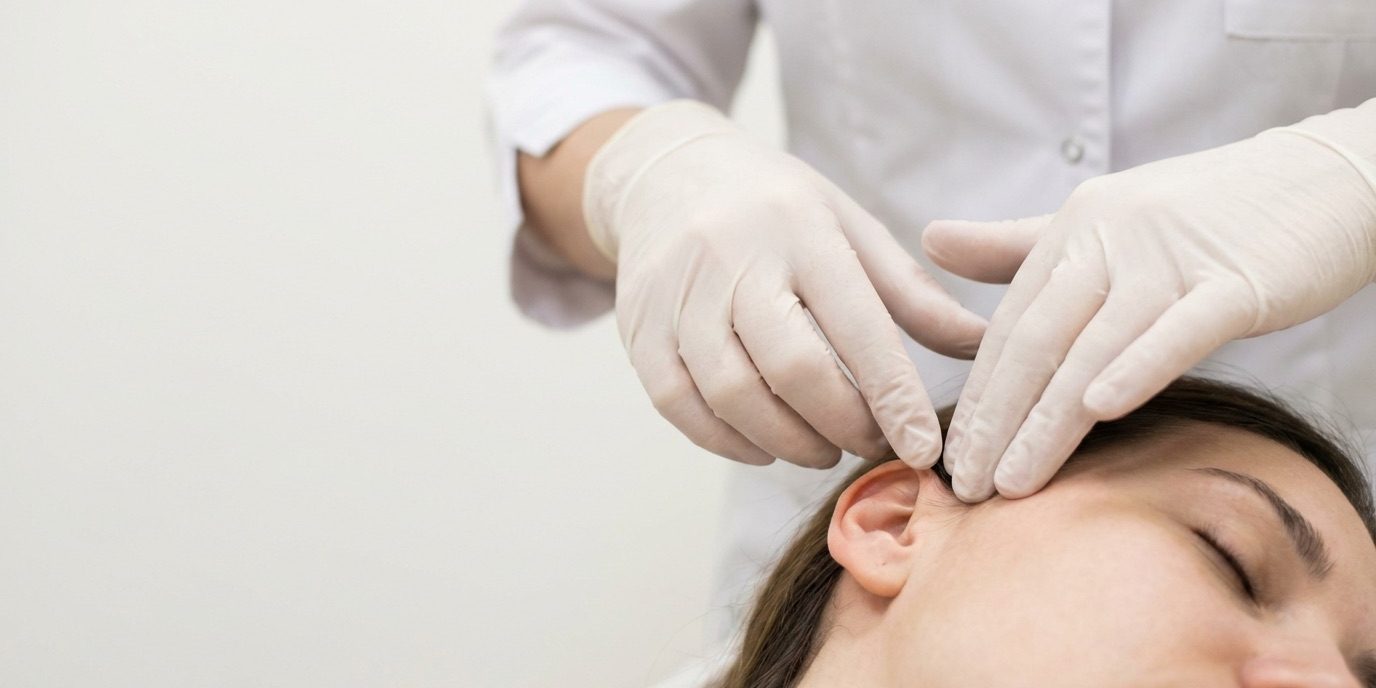
Jaw pain, clicking when you chew, headaches that feel like they sit behind the eyes, ear fullness with no infection — these are the daily realities of temporomandibular joint (TMJ) disorder. For many people in Richmond, TMJ symptoms have been brushed off as stress, a dental issue, or “just clenching.” The full picture is usually more layered, and the most effective treatments combine more than one discipline. At Artemis Wellness Clinic, our registered massage therapists, acupuncturists, and physiotherapists work together on TMJ in a way that single-discipline clinics typically cannot. We are located at 5911 No. 3 Road #130, two minutes from Brighouse SkyTrain Station, with direct billing to ICBC and most major extended health plans. Book at Jane App or call 604-242-2233.
What Is TMJ Disorder?
The temporomandibular joint connects your lower jaw (mandible) to the temporal bone of your skull, just in front of each ear. It is one of the most-used joints in the body — it moves every time you talk, chew, swallow, or yawn. Inside the joint sits a small fibrocartilage disc that allows the jaw to glide smoothly.
TMJ disorder (TMD) is an umbrella term for problems affecting this joint, the surrounding muscles (masseter, temporalis, pterygoids), and the disc. Symptoms are not always severe, but they tend to be persistent. Common presentations we see at our Richmond clinic include:
- Clicking, popping, or grinding sounds when opening or closing the mouth
- Pain in front of the ear, in the cheek, or radiating into the temples
- Limited or asymmetric jaw opening — for example, the jaw deviates to one side when opening
- Tension headaches that follow the pattern of the temporalis muscle
- Ear-related symptoms — fullness, tinnitus, or pressure with no infection
- Tooth pain or sensitivity that your dentist cannot explain
- Morning soreness in the jaw, suggesting overnight clenching or grinding (bruxism)
TMJ disorder is more common in women than men, and most often shows up between the ages of 20 and 50. It can develop suddenly after a dental procedure, whiplash, or trauma, or it can creep in slowly over years of stress, posture changes, and clenching.
What Causes TMJ Disorder?
TMJ disorder is rarely caused by one thing. The most common contributors we identify during assessment in Richmond:
Bruxism (clenching or grinding). Often happens during sleep without awareness. Stress, anxiety, poor sleep quality, and even some medications can drive it. The masseter and temporalis muscles work overtime, become hypertonic, and pull the joint out of its optimal position.
Postural strain. A forward-head position (common in office workers and drivers) shifts the resting position of the jaw and increases load on the joint. Many TMJ cases improve significantly when neck and upper back posture are addressed.
Whiplash and motor-vehicle accidents. ICBC patients frequently report new or worsened TMJ symptoms in the weeks following a rear-end collision, even when the jaw was not directly impacted. The sudden flexion-extension forces transmit into the jaw joint.
Dental work or prolonged mouth opening. Wisdom tooth extractions, long dental procedures, or orthodontic adjustments can sometimes trigger or expose underlying TMJ vulnerability.
Direct trauma. A fall, sports impact, or assault that strikes the jaw or side of the face.
Disc displacement. The internal disc shifts forward and either reduces (clicks back into place when opening) or stays displaced (limits opening — sometimes called “closed lock”).
Systemic factors. Inflammatory arthritis, hypermobility, and connective-tissue conditions can predispose the joint to dysfunction.
When to See a Professional
Many mild jaw clicks resolve on their own. Consider booking an assessment if you are experiencing any of the following:
- Jaw pain lasting more than two weeks
- Difficulty opening your mouth wide enough to eat normally
- Headaches more than three days per week with a temporal or behind-the-eye pattern
- Episodes where the jaw locks open or closed
- Recent motor-vehicle accident with new jaw, neck, or facial symptoms
- Ear fullness or tinnitus that has been cleared by your doctor (no infection)
- Tooth pain that your dentist has investigated and found no cause
For ICBC patients, TMJ symptoms after a motor-vehicle accident are typically covered when included in your treatment plan. Read more about ICBC acupuncture coverage in Richmond and how we bill directly under your claim.
Our Multidisciplinary Approach at Artemis
TMJ is one of the conditions where Artemis’s combined-team model makes the biggest measurable difference. Single-discipline TMJ care often plateaus; combined care typically does not.
Registered Massage Therapy
Our registered massage therapists treat TMJ both intra-orally (inside the mouth, with gloves and consent) and extra-orally. Intra-oral release of the medial and lateral pterygoid muscles is one of the most effective single techniques for chronic TMJ pain — these muscles cannot be reached from the outside, and they are usually the most restricted. External work targets the masseter, temporalis, suboccipitals, and upper cervical fascia.
Acupuncture and TCM
Acupuncture and Traditional Chinese Medicine at Artemis is led by Mandy Tam (R.Ac). Local needling around the joint, distal points along the stomach and gallbladder meridians, and electroacupuncture for stubborn cases all have research support for TMJ. Acupuncture is particularly useful when stress and clenching are central drivers — it down-regulates the sympathetic nervous system that keeps jaw muscles in a guarded state.
Physiotherapy
Our physiotherapists assess jaw mechanics, cervical spine mobility, and posture. Treatment usually includes manual joint mobilization, prescribed jaw and neck exercises, and postural retraining. For ICBC patients, physiotherapy is the cornerstone of the active rehabilitation plan.
How We Combine Them
A typical TMJ care plan at our Richmond clinic might look like:
- Week 1–2: Initial physiotherapy assessment, then weekly massage focused on intra-oral release and acupuncture for nervous-system regulation
- Week 3–6: Continued massage and acupuncture, physio rechecks every two weeks, home exercise progression
- Week 7+: Spaced maintenance and self-management — most patients move to monthly check-ins
Many TMJ patients also benefit from a night guard from their dentist, which we coordinate around without conflict.
Insurance and ICBC Coverage
TMJ treatment at Artemis is covered under the standard RMT, acupuncture, and physiotherapy benefits across most plans:
- ICBC — covered for motor-vehicle-accident-related TMJ symptoms when included in your treatment plan. We bill ICBC directly under your claim number — no out-of-pocket cost for pre-approved sessions.
- Pacific Blue Cross, Sun Life, Manulife, Green Shield Canada, Canada Life — direct billed when your plan includes RMT, acupuncture, or physiotherapy coverage.
- WorkSafeBC — covered for workplace-related TMJ injuries with an approved claim.
If you are unsure whether your specific plan covers the discipline you need, our front-desk team can verify before your first appointment.
Recovery Timeline — What to Expect
TMJ recovery is variable. The trajectory depends on how long the dysfunction has been present, whether bruxism is still active, and how multi-layered the contributing factors are.
- Acute, post-trauma TMJ (recent whiplash, dental procedure, or impact): often shows meaningful improvement in 4–6 weeks of combined care.
- Chronic, postural/clenching-driven TMJ (months or years of symptoms): typically takes 8–12 weeks of structured care, with continued maintenance for the first six months.
- Disc displacement with locking: requires more conservative jaw mobilization and may need dental or specialist co-management. Expect 8–16 weeks for stable function.
Most patients notice some immediate change after the first intra-oral release session — a sense of the jaw “sitting” differently. Lasting change builds over the first three to four visits as the new muscle length gets reinforced through daily eating, talking, and sleep posture.
Self-Care Between Sessions
Manual therapy works best when paired with daily habits that reduce ongoing load on the joint:
- Soften your diet during flare-ups — for one to two weeks, avoid hard, chewy, or large foods (bagels, tough meat, big sandwiches). Cut food into smaller pieces.
- Watch your daytime jaw resting position — lips together, teeth apart, tongue gently on the roof of the mouth. The clenched-teeth resting position is the most common driver of chronic muscle fatigue.
- Use moist heat for 10–15 minutes on tight masseter and temporalis muscles, especially in the morning if you wake with soreness.
- Limit gum chewing, ice crunching, and nail biting — these are repetitive load amplifiers.
- Sleep on your back or alternate sides if side-sleeping on the painful side aggravates symptoms.
- Manage daytime stress with whatever works for you — short walks, breathing exercises, or breaking up long screen time. Sympathetic nervous system load drives clenching.
Your therapist will give you specific exercises tailored to your pattern, often including gentle controlled jaw opening, tongue-up isometric holds, and postural cues for the head and neck.
Frequently Asked Questions
Do I need a doctor’s referral to see an RMT, acupuncturist, or physio for TMJ?
No. RMT, registered acupuncture, and physiotherapy in BC are direct-access — you can book without a referral. ICBC and WorkSafeBC patients should have an open claim number.
Do you direct bill ICBC for TMJ treatment?
Yes. For ICBC, we bill directly under your claim number with no payment required from you for pre-approved sessions. TMJ care is most often delivered through your RMT, acupuncture, or physiotherapy benefit allotment within the claim.
Is intra-oral massage uncomfortable?
Most patients describe it as “intense but bearable” and report immediate relief. The therapist wears gloves, asks for consent at every step, and adjusts pressure based on your feedback. Sessions typically include only 5–10 minutes of intra-oral work within a 60-minute visit.
How many sessions will I need for TMJ?
Most patients see meaningful improvement in 4–8 sessions over 6–10 weeks. Acute, single-trigger cases may resolve faster; chronic clenching-driven patterns take longer and often benefit from monthly maintenance afterward.
Can I do RMT, acupuncture, and physiotherapy in the same week?
Yes — this is common at our Richmond clinic, especially for ICBC patients. The disciplines are complementary rather than duplicative, and our practitioners coordinate so you get the right combination rather than overlapping work.
Will TMJ treatment help my headaches too?
Often yes. The temporalis and suboccipital muscles share strong referral patterns with TMJ. Many patients with chronic tension headaches see substantial improvement once TMJ contributors are addressed.
What about my night guard — should I keep wearing it?
Yes, unless your dentist advises otherwise. A well-fitted occlusal splint reduces the destructive force of nighttime clenching and complements manual therapy. We do not replace dental care — we complement it.
Do you have evening or weekend appointments?
Yes. Real-time availability shows in our Jane App booking page.
Book TMJ Treatment in Richmond
Artemis Wellness Clinic
5911 No. 3 Road #130, Richmond, BC V6X 0K9
Two minutes from Brighouse SkyTrain Station, directly across from Richmond Centre
Phone: 604-242-2233
Online booking: artemis.janeapp.com
ICBC, WorkSafeBC, Pacific Blue Cross, Sun Life, Manulife, Green Shield Canada, and Canada Life direct billing available. Evening and weekend appointments included.