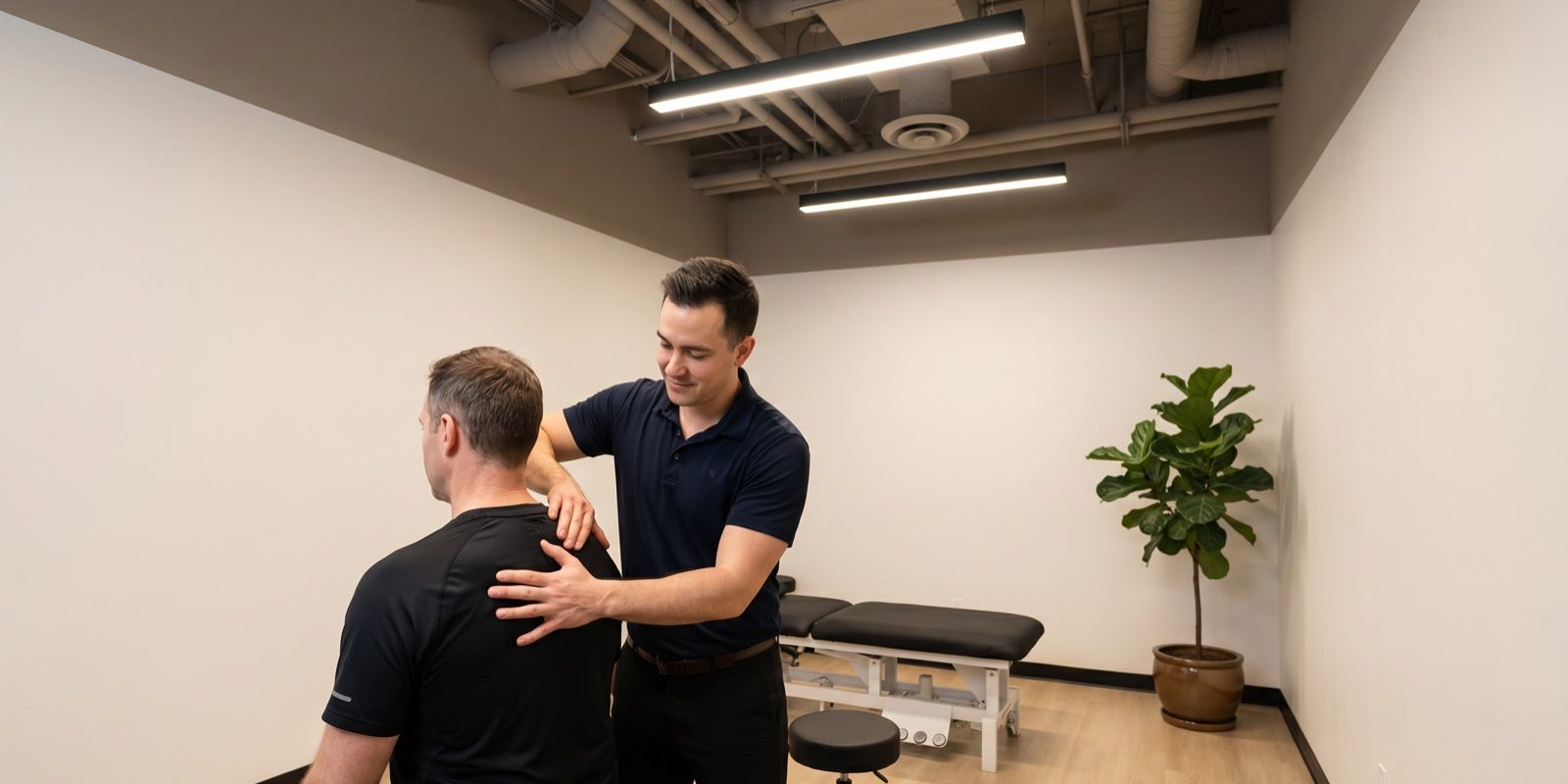
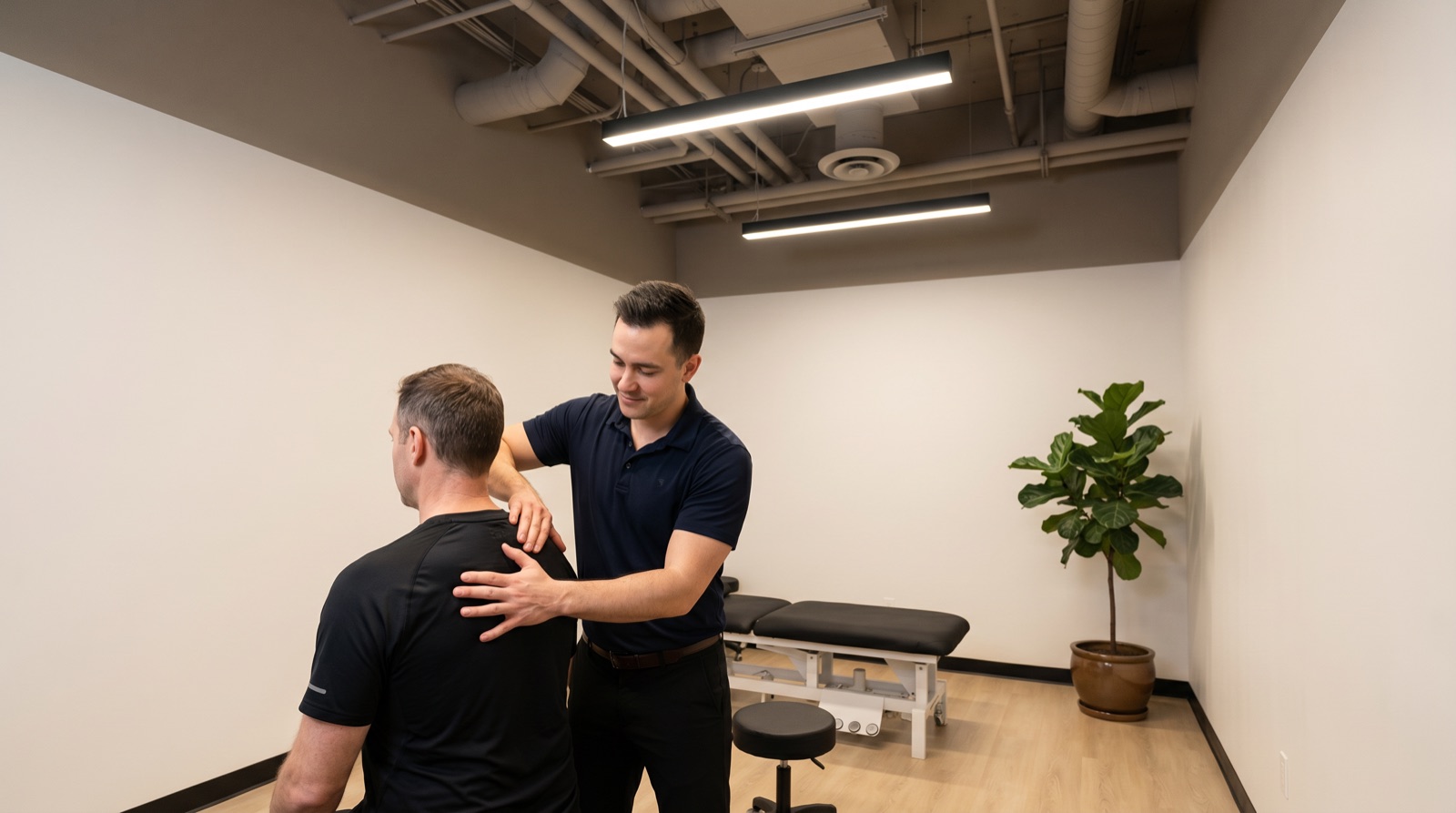
Whether you are recovering from a car accident, managing chronic pain, or rehabilitating after surgery, physiotherapy in Richmond BC can help you regain mobility, reduce pain, and return to the activities you love. At Artemis Wellness Clinic, our Registered Physiotherapist, Colin, combines clinical skills with a compassionate, patient-centered approach to deliver rehabilitation focused on your goals.
Your Physiotherapist: Colin, Registered Physiotherapist
Physiotherapy at Artemis is provided by Colin, a Registered Physiotherapist licensed with the College of Health and Care Professionals of BC (CHCPBC). You can check any physiotherapist’s licence on the CHCPBC public registry. Colin holds a Master of Physiotherapy from McMaster University and a Bachelor’s degree in Kinesiology from the University of British Columbia (UBC), and he sees patients in English and Chinese.
His approach is centered around understanding the factors contributing to each person’s symptoms and developing an individualized treatment plan that combines hands-on treatment, exercise and education, to help you move with greater confidence and less discomfort. Colin works with a wide range of people, from those managing everyday aches and pains to active individuals and athletes looking to return to their sport. Read more in Colin’s profile or on his team page.
Physiotherapy at Artemis takes place in a multidisciplinary setting. Our clinic near Richmond Centre offers physiotherapy, RMT, acupuncture, chiropractic, and kinesiology under one roof, so we can coordinate your physio treatments with complementary therapies to support your recovery.
What Is Physiotherapy and Who Needs It?
Physiotherapy is a regulated healthcare profession focused on assessing, diagnosing, and treating movement disorders, pain conditions, and physical injuries. A physiotherapist uses hands-on techniques, exercise prescription, and education to help patients restore function and prevent future injury.
You might benefit from physiotherapy in Richmond if you are dealing with pain from a motor vehicle accident, recovering from surgery, managing a chronic condition like arthritis, or simply want to move better and feel stronger. Physio is also commonly used for workplace injuries, sports injuries, and age-related mobility challenges.
Conditions We Treat with Physiotherapy
Our physiotherapist at Artemis treats a wide range of conditions. Back pain is one of the most common reasons patients seek physio in Richmond BC. Whether it stems from poor posture, a herniated disc, or a motor vehicle accident, physiotherapy starts by assessing what is behind your symptoms and addresses it through targeted exercises, manual therapy, and movement retraining.
Neck pain and whiplash injuries are also commonly treated with physiotherapy, often alongside other treatments. Post-surgical rehabilitation is another core area where physio aims to help restore range of motion and strength after knee replacements, shoulder surgeries, and other procedures.
Sports injuries, including sprains, strains, tendonitis, and ligament tears, are treated through progressive rehabilitation programs. Workplace injuries such as repetitive strain, lifting injuries, and falls may also benefit from physio treatment. If you have been injured at work, learn about your ICBC and insurance coverage options.
ICBC Physiotherapy Coverage: 25 Pre-Authorized Sessions
If you have been injured in a car accident in British Columbia, ICBC pre-approves up to 25 physiotherapy treatments within the first 12 weeks after your accident, and no doctor’s referral or ICBC approval is needed to get started.
At Artemis, we handle the ICBC paperwork and bill ICBC directly for your pre-approved treatments. You simply bring your claim number and BC PHN, and our team takes care of the rest. If part of a fee is not covered by ICBC (a user fee), we tell you before your treatment. If your recovery requires additional sessions beyond the initial 25, your physiotherapist can submit a treatment plan extension to ICBC for approval.
Beyond physiotherapy, your ICBC claim also covers acupuncture, RMT, chiropractic, and kinesiology at Artemis. This means you can build a comprehensive recovery plan without visiting multiple clinics. Learn more about ICBC acupuncture coverage to see how different treatments can be combined.
Coordinated Care at Artemis: Physio Combined with RMT, Acupuncture and Chiropractic
In multidisciplinary care, practitioners from different health professions work together on your treatment. At Artemis Wellness Clinic, your physiotherapist near Richmond Centre works alongside registered massage therapists, a registered acupuncturist, chiropractors, and kinesiologists. This team approach means your care is coordinated, consistent, and comprehensive.
For example, a patient recovering from a car accident might receive physiotherapy for strengthening and mobility, massage therapy for muscle tension, and acupuncture for pain relief and stress reduction. Because all practitioners are in the same clinic, they can communicate about your progress and adjust your treatment plan together.
This is the Artemis approach: different treatments are available in one clinic, so each stage of your recovery can be cared for in one place.
Our Physiotherapy Approach
Our physiotherapy care at Artemis Wellness Clinic focuses on injury rehabilitation and mobility training, with a thorough, evidence-based approach to every patient. Your physiotherapist takes the time to assess your condition fully, explain your diagnosis in plain language, and create a personalized treatment plan with clear goals and timelines.
Whether you are a weekend athlete with a nagging knee injury or someone recovering from a serious accident, your physiotherapist will work with you step by step. To meet our practitioners, visit our team page.
What to Expect at Your First Physiotherapy Appointment
Your first physio appointment at Artemis can be booked as a 30-, 45- or 60-minute visit. Your physiotherapist will begin with a comprehensive assessment that includes your medical history, a physical examination, and an evaluation of your movement patterns and functional limitations.
Based on this assessment, your physiotherapist will explain the findings and recommend a treatment plan. Your first session will often include some hands-on treatment and initial exercises. You will leave with a clear understanding of your condition, your treatment goals, and what the next steps look like. Visit our services page for a full list of what we offer.
Physiotherapy Fees
| Length | Price |
|---|---|
| 30 minutes | $110 |
| 45 minutes | $145 |
| 60 minutes | $170 |
Each length can be booked as a first (initial) visit or a follow-up. Prices as listed on the clinic’s Jane booking site in October 2026; please confirm current rates when booking.
Physiotherapy Treatments & Techniques We Use
Physiotherapy at Artemis is built around a toolkit of techniques chosen to match your specific injury, stage of healing, and goals. Rather than applying the same routine to everyone, your physiotherapist combines hands-on care with active strategies so that progress carries over from the treatment table into daily life. Below are the main approaches you may encounter during a course of care.
- Manual therapy: Hands-on techniques such as joint mobilization, soft-tissue release, and assisted stretching that may help reduce stiffness, ease discomfort, and restore range of motion. For deeper soft-tissue work between sessions, some patients also pair physiotherapy with registered massage therapy.
- Individualized exercise prescription: A targeted home and in-clinic program designed to rebuild strength, mobility, and endurance. Exercises are progressed as you improve, so the load always matches what your body is ready for.
- Movement re-education: Coaching on how you move, lift, sit, and load joints so that faulty patterns contributing to your symptoms can be retrained over time.
- Education and self-management: Clear explanations of what is happening, what to expect, and what you can do between visits. Understanding your condition is an important part of a good recovery.
- Adjunct modalities: Supporting tools such as taping, heat or cold guidance, and other modalities used selectively to complement active treatment rather than replace it.
The specific mix is decided together after your assessment, and it is revisited as your recovery progresses. If you are recovering from a motor-vehicle injury, this same toolkit applies under our ICBC physiotherapy care, with treatment planned around your claim and recovery timeline.
An Evidence-Informed Approach to Physiotherapy
Good physiotherapy starts with a thorough assessment, not a treatment. Before any hands-on work begins, your physiotherapist takes a history, screens your movement, and tests the relevant joints, muscles, and nerves to understand what is driving your symptoms. That assessment shapes a working diagnosis and a plan you can actually follow.
From there, we set realistic goals and discuss honest timelines. Healing tissue follows its own schedule, and recovery from an acute strain looks very different from managing a long-standing or recurring problem. We will tell you what the evidence generally supports for your situation, what we expect to change in the first few visits, and how we will know whether the plan is working. If progress stalls or something does not fit the expected pattern, we reassess and adjust rather than simply continuing.
We also emphasize active recovery. Passive treatments can provide welcome relief, but lasting results usually come from rebuilding strength, mobility, and confident movement. Many patients find the combination of in-clinic care and a manageable home program helpful. Where appropriate, we coordinate with other practitioners in our multidisciplinary clinic, and we offer direct billing to many extended health insurers to keep care straightforward.
How Physiotherapy Works With Kinesiology & Active Rehab at Artemis
Recovery is rarely finished the moment your pain settles. Early on, physiotherapy often leans on more hands-on, symptom-focused care to calm an injury and restore basic movement. As you stabilize, the emphasis shifts toward loading, strengthening, and returning to the activities that matter to you, whether that is work, sport, or simply moving through your day without flare-ups.
That is where kinesiology and active rehabilitation come in. When you are ready to progress from primarily passive treatment to a more demanding, exercise-driven program, your physiotherapist can hand off or work alongside a kinesiologist who supervises structured strengthening, conditioning, and movement training. This continuity means your program builds logically from one stage to the next instead of starting over.
You can learn more in our kinesiology and active rehab guide for Richmond, BC. Because both services sit under one roof at our clinic near Brighouse SkyTrain, coordinating the transition is straightforward, and your care team can share notes so nothing falls through the cracks as you move toward your goals.
Physiotherapy Guides
Find out more about physiotherapy at Artemis and in BC:
- Your first physiotherapy appointment: what to expect
- Physiotherapy referrals and coverage in BC
- Physiotherapy cost and direct billing in Richmond
- ICBC physiotherapy after a car crash
- Knee pain and physiotherapy
- Meet Colin, our Registered Physiotherapist
Frequently Asked Questions About Physiotherapy in Richmond
Do I need a doctor’s referral for physiotherapy?
No. In British Columbia, you can see a physiotherapist directly without a referral from a doctor. This applies to both private pay and ICBC-funded treatments.
Is physiotherapy covered by insurance?
Yes. Most extended health insurance plans in BC cover physiotherapy. Artemis offers direct billing to Pacific Blue Cross, Sun Life, Manulife, Canada Life, Green Shield, and other major insurers. ICBC also covers physiotherapy for eligible claims.
How many physiotherapy sessions will I need?
The number of sessions varies depending on your condition. Acute injuries may need about 4 to 8 sessions, while chronic conditions or post-surgical rehab may require longer-term care. Your physiotherapist will discuss a realistic timeline with you during your first visit.
Can I get physiotherapy and massage therapy on the same day?
Absolutely. At Artemis, you can book physio and RMT back to back for maximum convenience. Many patients find that combining these treatments in a single visit saves time.
Book Your Physiotherapy Appointment in Richmond
Whether you are dealing with an injury, recovering from surgery, or managing chronic discomfort, physiotherapy at Artemis Wellness Clinic aims to help you move better and live better.
Book your physiotherapy appointment online or call us at 604-242-2233.
Artemis Wellness Clinic is located at 130-5911 No. 3 Road, Richmond BC, V6X 0K9, just steps from Richmond Centre. We are open seven days a week, and walk-ins are welcome.
Insurance & direct billing: We direct bill many extended-health plans and ICBC for physiotherapy — see how physiotherapy direct billing works in Richmond.