ICBC Coverage for Acupuncture and TCM in Richmond, BC
Yes — ICBC covers acupuncture for motor vehicle accident injuries in BC, regardless of fault.
Under the current Enhanced Care model, you are pre-authorized for up to 12 acupuncture sessions within 12 weeks of your accident date. No doctor’s referral is required to start treatment. At Artemis Wellness Clinic, we bill ICBC directly for your pre-approved treatments. If part of a fee is not covered by ICBC (a user fee), we tell you before your treatment.
You can also combine acupuncture with RMT, physiotherapy, chiropractic, and kinesiology under the same ICBC claim — and at Artemis, all of these services are available in one location.
For a detailed step-by-step guide to the ICBC claims process, read our complete resource: ICBC Massage Therapy Claims in Richmond: Complete Guide 2026.
Your First TCM Appointment at Artemis: What to Expect
Before You Arrive
- Note your main health concerns.
- Bring a list of any medications or supplements.
- Wear loose, comfortable clothing — your practitioner may need access to your forearms, lower legs, or back.
The Consultation (15–20 minutes)
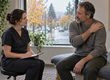
Your practitioner will ask detailed questions about your health history, sleep, digestion, stress, and energy levels. They will also perform traditional diagnostic techniques — pulse reading at both wrists and tongue observation — to assess your internal balance. This conversation is the foundation of everything that follows.
Treatment (30–45 minutes)
Based on the consultation, your practitioner designs a treatment plan specific to you. Your first session may include acupuncture, cupping, or both. Most patients find the experience deeply relaxing — many fall asleep on the treatment table.
After Your Session
Some patients feel lighter, calmer, or more energized after a session; others notice changes over the following 24–48 hours. Your practitioner will recommend a treatment schedule — typically weekly sessions for 4–8 weeks — and may suggest dietary or lifestyle adjustments to support your progress.
What Is Acupuncture & Traditional Chinese Medicine?
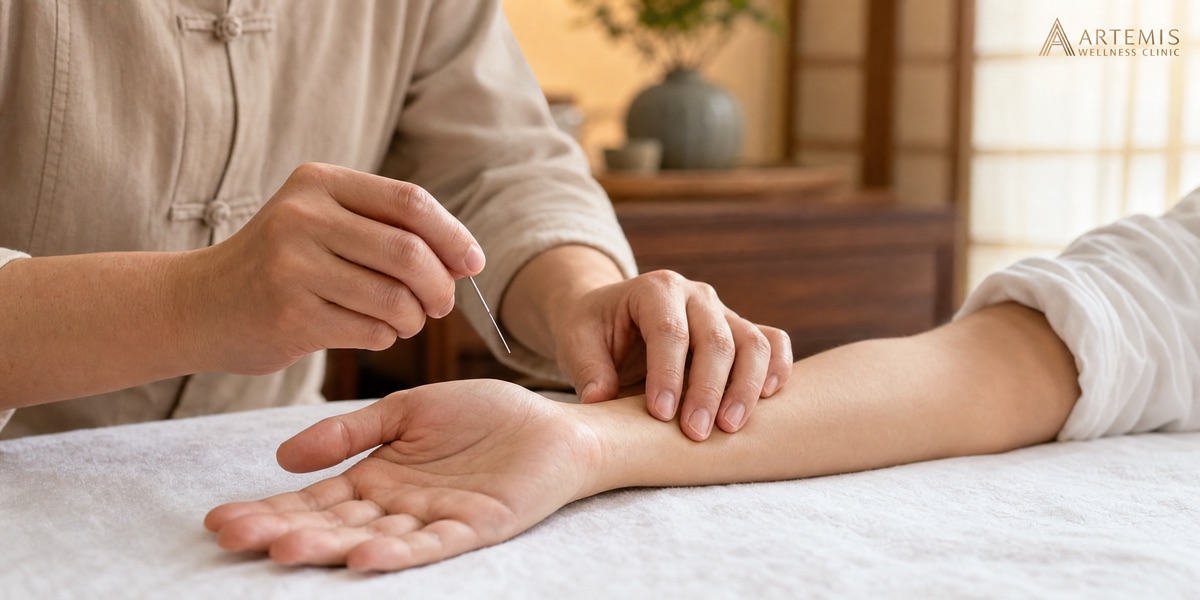
Acupuncture is the practice of inserting very fine, sterile, single-use needles into specific points on the body. The needles are far thinner than the ones used for injections or blood tests, and most people feel only a small pinch or a dull, heavy sensation as each one is placed. A typical session involves resting comfortably while the needles stay in for around 20 to 30 minutes.
Acupuncture is one part of Traditional Chinese Medicine (TCM), a system of health care developed over thousands of years. In the TCM framework, those points sit along pathways that practitioners use to map how the body functions as a whole. If you’d like a plain-language explanation of those pathways, our guide on what a meridian is in TCM breaks it down without the jargon. Alongside acupuncture, TCM can include techniques such as cupping, gua sha, and lifestyle and food-based suggestions, which your practitioner may draw on depending on your goals.
Common Reasons People Try Acupuncture & TCM
People come to acupuncture for many different reasons. The honest picture is that the strength of the research varies from one concern to another, and individual responses differ too. Rather than promise results, we focus on what acupuncture may support, and we’ll always be straightforward with you about what to realistically expect. Many patients explore acupuncture and TCM for:
- Pain and musculoskeletal concerns — back and neck tension, joint and muscle aches, and tightness related to everyday strain or overuse.
- Stress and sleep — many people find acupuncture sessions calming, and some use them as part of a wider routine for managing stress and supporting more restful sleep.
- Women’s health and fertility support — acupuncture is often used as a complementary, supportive approach; you can read more on our fertility acupuncture in Richmond page.
- Digestion — some patients seek support for occasional digestive discomfort and bloating.
- Headaches — acupuncture is a common option people consider for tension-type and recurring headaches.
We see acupuncture as part of a broader plan rather than a standalone fix. If your concern would be better served by another approach, or by seeing your physician first, we’ll tell you.
Acupuncture Techniques & Modalities at Artemis
No two bodies are the same, so your practitioner may combine several techniques within the TCM toolkit. Depending on who you see and what you’re working on, a session might include:
- Acupuncture — the placement of fine sterile needles at selected points.
- Electro-acupuncture — a gentle electrical current applied through the needles to add stimulation.
- Cupping — suction cups placed on the skin to encourage local circulation and ease muscle tension.
- Gua sha — gentle, repeated strokes across the skin with a smooth-edged tool.
- Acupressure — firm, targeted pressure applied by hand rather than with needles.
It’s worth knowing that our practitioners have different scopes. Mandy Tam focuses on acupuncture and acupressure, paired with lifestyle and food-therapy ideas you can use at home; she does not prescribe Chinese herbal medicine, and Artemis provides acupuncture and related techniques only, not herbal medicine. Ethan Choi is also a Registered Traditional Chinese Medicine Practitioner (R.TCMP) in addition to being a Registered Acupuncturist. When you book, we’ll help match you with the right practitioner for what you’re hoping to address.
Meet Our Registered Acupuncturists
Care at Artemis comes from registered practitioners who are accountable to provincial standards. On the acupuncture and TCM side, you may work with:
Mandy Tam, R.Ac — founder of the clinic and a Registered Acupuncturist. Mandy works in English, Mandarin, and Cantonese, and sees patients for fertility and women’s health support, pain, stress, and sleep. Her approach blends acupuncture and acupressure with practical lifestyle and food-therapy suggestions you can carry into daily life.
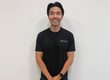
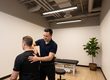
Ethan Choi, R.Ac, R.TCMP, DOMP — a Registered Acupuncturist and Registered Traditional Chinese Medicine Practitioner who is also trained in osteopathic manual therapy. Ethan offers TCM-based acupuncture alongside hands-on manual techniques, and sees patients in English and Korean.
An Honest Word on What Acupuncture Can and Can’t Do
We think you deserve a clear-eyed picture. Acupuncture is not a cure, and no responsible practitioner can guarantee a particular outcome. The research base is stronger for some concerns than for others, and how a person responds can vary; some notice meaningful changes, while others notice little. What we can promise is that we’ll be honest about the evidence, set realistic expectations, and never pressure you into more sessions than you need.
Acupuncture is meant to work alongside, not replace, the care of your family doctor or specialist, and we’ll encourage you to keep your physician in the loop, especially for anything new or serious. Registered Acupuncturists and TCM practitioners in British Columbia are regulated by the College of Complementary Health Professionals of BC (CCHPBC), which sets the standards of practice, safety, and ethics our team follows. If you have questions about coverage before you start, our guides on acupuncture cost and direct billing and direct billing insurance in Richmond can help you plan.
Frequently Asked Questions About Acupuncture in Richmond, BC
Is acupuncture painful?
The needles used in acupuncture are finer than a human hair — nothing like a medical injection. Most patients feel a mild sensation at certain points, followed by deep relaxation. Many say they barely felt the needles at all.
How many sessions will I need?
This depends on your condition. Acute issues typically need around 3–6 sessions. Chronic conditions may require 8–12 sessions or more. Your practitioner will discuss a realistic timeline at your first visit.
Is TCM safe?
When provided by a registered practitioner, acupuncture and related TCM techniques have a good safety record. All needles are single-use and sterile. Our acupuncturists are licensed with the College of Complementary Health Professionals of BC (CCHPBC).
Can I use TCM while taking medication?
Yes. TCM is frequently used alongside conventional treatment. Always inform your practitioner about any medications so they can safely coordinate your treatment with the rest of your care.
Does my insurance cover acupuncture?
Many extended health plans in BC cover acupuncture from registered practitioners, up to the plan’s limits. Artemis offers direct billing to major insurers including Pacific Blue Cross, Sun Life, Manulife, Canada Life, and more; you pay only the part your plan does not cover (co-pay, deductible or amounts above your plan maximum). Check your plan details or ask our front desk — we are happy to help.
Do you speak Mandarin or Cantonese?
Yes. Our team includes multilingual practitioners and staff.
Begin Your Health Journey
Whether you are seeking relief from chronic pain, recovering from an accident, navigating a fertility journey, or simply ready to invest in your long-term health — TCM-based acupuncture at Artemis Wellness Clinic in Richmond offers a path that honours both ancient wisdom and modern science.
We do not believe in quick fixes. We believe in understanding your body, respecting its intelligence, and creating the conditions that support your recovery.
Call: +1 (604) 242-2233
Visit: 5911 No. 3 Road, Suite 130, Richmond, BC V6X 0K9
Insurance & direct billing: We direct bill many extended-health plans for acupuncture, plus ICBC and WorkSafeBC — see how acupuncture direct billing works in Richmond.
More on our acupuncture & TCM care: new guides from Ethan Choi, R.Ac, R.TCMP, DOMP — choosing a TCM clinic in Richmond (what R.Ac, R.TCM.P and Dr.TCM actually mean), cupping & gua sha: the marks, the evidence, and who should avoid them, and combining acupuncture with osteopathic manual therapy.