When the sky over Richmond turns orange-grey and the Air Quality Health Index (AQHI) climbs to 9, 10 or beyond, something in many of us tightens. The wildfire smoke anxiety Richmond residents describe every smoke season — and the restless nights that come with it — is not a personal failing; it is a normal stress response to a genuinely stressful situation. This page was written during one such stretch — hundreds of fires burning across BC — but it applies to any advisory, any summer. I’m Mandy Tam, R.Ac, an acupuncturist at Artemis Wellness Clinic focused on stress and sleep, and this plan gathers our team’s suggestions: self-help for tonight, clinic supports, and when to seek mental-health care.
Why does wildfire smoke make me feel so anxious?
Anxiety during smoke season is a normal stress response: your nervous system is reading real signals — a sky that looks wrong, alarming news, disrupted plans — and doing its job. Orange light reads as danger at a gut level, the news streams evacuation alerts, and steadying routines — morning walks, kids’ practices, dinner outside — disappear. Cooped up indoors, even compulsively checking the fire map is just your mind hunting for control. None of this means you are fragile; it means you are paying attention.
Why is my sleep worse during smoke season?
Smoke-season sleep problems usually come from a stack of situational causes — nothing is wrong with you. Closed windows make bedrooms warm and stuffy. Days indoors mean less daylight and less movement, both natural sleep cues. Smoke irritates eyes, nose and throat, which makes settling harder. And a stress system on alert all day gets loud at night: distractions stop, worries surface, one last news check re-alerts you. Warmer room, poorer air, less rhythm, more alarm — of course sleep suffers. The encouraging part: each piece can be nudged.
How can our Richmond team support stress and sleep during smoke season?
We combine acupuncture, registered massage therapy and safe indoor movement — no single therapy is a fix, but each may help you downshift.
TCM and acupuncture perspective — Mandy Tam, R.Ac
In my treatment room, smoke season has a recognizable pattern: racing thoughts, tight chest, shallow breathing, 3 a.m. wake-ups. Acupuncture offers quiet, screen-free time, and many patients find sessions calming; some tell me sleep comes more easily on treatment nights. The honest picture: evidence for acupuncture in anxiety and insomnia is promising but mixed, so I offer it as a support worth evaluating for yourself — never a promised result, and never a treatment for an anxiety disorder, which needs proper mental-health care. Our acupuncture for stress and insomnia page explains what sessions involve.
Three calming acupressure points to use at home:
- Yintang (印堂), between the eyebrows: close your eyes and make slow, light circles with a fingertip for a minute or two, breathing slowly.
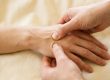
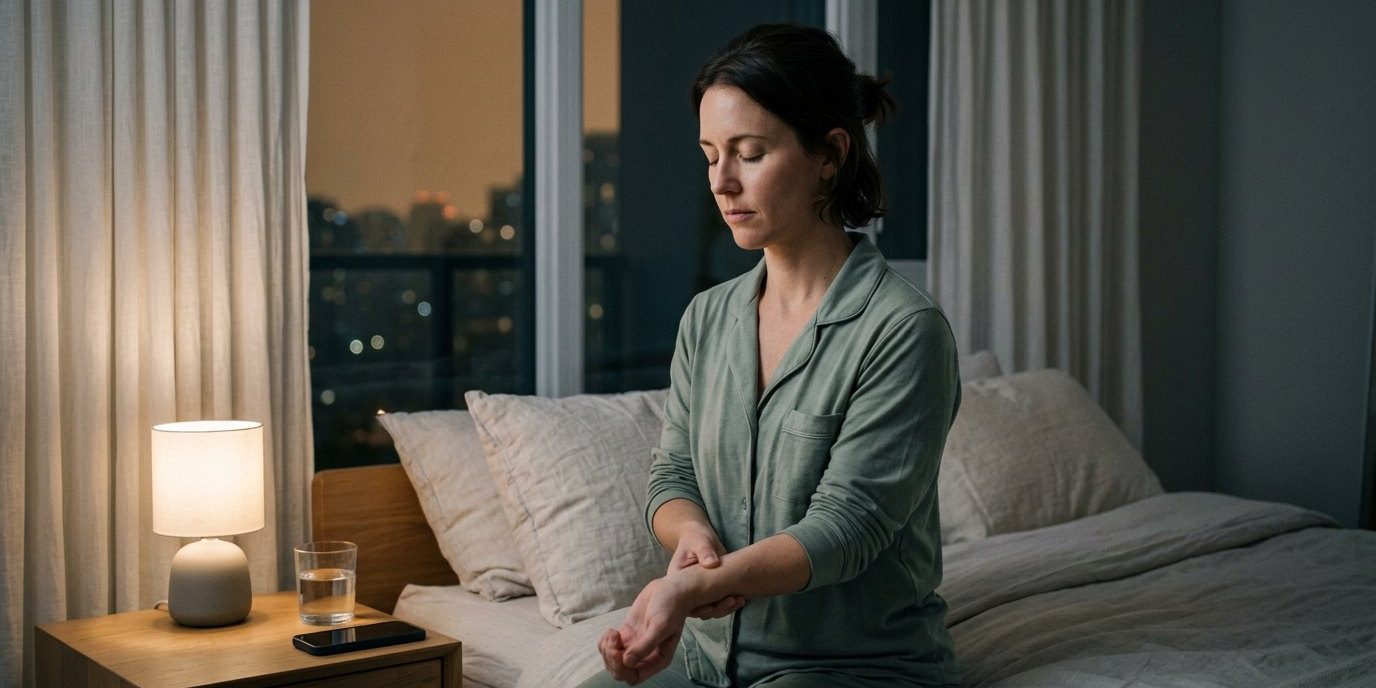
- Shenmen, HT7 (神门), on the inside wrist crease, pinky side, in the small hollow: press gently for 30 to 60 seconds, then switch wrists — a classic calming and sleep point, easy to reach lying in bed.
- Yongquan, KD1 (涌泉), on the sole, in the hollow behind the ball of the foot when your toes curl: firm, comfortable thumb circles, about a minute per foot before bed — grounding for many people.
Pair the points with a simple wind-down routine:
- Keep a fixed lights-out time, weekends included.
- Set a doomscrolling curfew: screens and news off 30 to 60 minutes before bed — one early-evening fire-map check, then leave it until morning.
- Slow the breath: 4-7-8 breathing (inhale for 4, hold for 7, exhale for 8, four rounds) or slow diaphragmatic breathing, exhaling longer than you inhale.
- Keep the room cool and dark: lighter bedding, a fan, blackout curtains, and a bedroom air purifier or air conditioner if you have one.
Registered massage therapy perspective — Dave Tam, RMT (Director)
Dave’s starting point: stress lives in the body. During advisories he sees clenched jaws, shoulders parked by the ears, necks stiff from hunching over fire updates. Relaxation-focused registered massage therapy may help the nervous system downshift; many clients say sleep feels easier in the days after a session, though responses vary. His two-minute self-release for fire-map moments:
- Jaw, one minute: rest fingertips on the masseter muscles — they bulge at the jaw angle when you clench. Let your teeth part slightly; slow, light circles while lengthening each exhale.
- Shoulders and neck, one minute: inhale, lift the shoulders toward the ears, hold five seconds, exhale, let them drop; repeat three times, then gently knead each shoulder-top with the opposite hand.
Moving indoors — kinesiology support and combined care
Movement is one of the better-supported everyday helps for mood and sleep, but high-AQHI days rule out outdoor workouts. Swap in a lighter indoor menu:
- Easy stair intervals: a few unhurried flights, rest, repeat — keep a conversational pace.
- A simple bodyweight circuit: sit-to-stands, wall push-ups, step-backs; two or three relaxed rounds.
- Mobility and stretch breaks: a few minutes each hour, especially for neck, chest and hips.
- Indoor walking: a lap-friendly mall or long corridor keeps you moving away from the smoke.
Keep intensity lower while air is poor — some smoke drifts indoors — and save harder sessions for clearer days. Our kinesiology team can build a short indoor routine around your space and fitness level. And when body tension and rough sleep arrive together, Ethan Choi, R.Ac, R.TCMP, DOMP combines gentle osteopathic manual work with acupuncture in one plan — see our osteopathy and acupuncture combined care page.
When should I seek professional mental-health care?
Reach out to your family doctor or a registered mental-health professional if anxiety is persistent, interferes with work, family or daily life, brings panic attacks, or includes any thoughts of self-harm. To be straightforward: everything on this page supports wellbeing, but none of it replaces mental-health treatment, and acupuncture and massage are not treatments for anxiety disorders. Asking for that help is not a failure of self-care — it is plain good sense. If you are in crisis right now, call or text 9-8-8 — Canada’s Suicide Crisis Helpline — free, confidential and open around the clock. You deserve support that matches what you are carrying.
What do Richmond patients ask about smoke-season anxiety and sleep?
These come up all smoke season; here are honest answers.
Is it normal to feel anxious during smoke season?
Yes. Orange skies, alarming coverage and cancelled routines are real stressors; a heightened response is your body doing its protective job — not weakness, not overreacting.
Can acupuncture or massage treat an anxiety disorder?
No. They are supports for everyday stress and sleep quality, not treatments for anxiety disorders. If you suspect one, start with your family doctor or a registered mental-health professional; we are glad to work alongside that care.
Which acupressure point should I try first for sleep?
Shenmen (HT7) at the wrist crease is an easy start because you can press it lying in bed; Yintang, between the eyebrows, is another calming option. Responses differ from person to person.
Is it safe to exercise indoors during an air quality advisory?
Generally yes for healthy adults, if you keep intensity lower than usual — some smoke reaches indoors. With a heart or lung condition, pregnancy, chest tightness or unusual breathlessness, check with your doctor first.
How many acupuncture or massage sessions would I need?
There is no fixed number, and we never promise results. Some people book an occasional session during stressful stretches; others try a short series and reassess.
Does extended health insurance cover these services?
Many extended health plans include registered massage therapy and acupuncture, and we offer direct billing to many insurers. Plans differ, so please confirm your own coverage — we cannot guarantee reimbursement.
What if my anxiety feels bigger than smoke-season stress?
Trust that instinct. Persistent worry, panic attacks, or dread that lingers after the air clears deserves proper care from your doctor or a registered mental-health professional — in a crisis, call or text 9-8-8 any time.
How do I book with our Richmond team?
Book online at artemis.janeapp.com, call 604-242-2233, or visit Artemis Wellness Clinic at 5911 No. 3 Road #130, Richmond BC V6X 0K9 — a three-minute walk from Brighouse SkyTrain. Six disciplines under one roof — registered massage therapy, acupuncture and TCM, physiotherapy, chiropractic, kinesiology and osteopathy — mean you can start with one support and add another if it helps. Mention smoke-season stress and sleep when you book and we will match you with the right practitioner. Smoke season passes every year. Until the sky clears, we would be glad to help you feel a little steadier, one calm evening and one easier night at a time.