Ask an acupuncturist which acupressure points for digestion and nausea are worth learning, and the same three names come up: PC6 (Neiguan), ST36 (Zusanli) and CV12 (Zhongwan). I’m Mandy Tam, R.Ac, a registered acupuncturist at Artemis Wellness Clinic in Richmond, BC, and I teach this trio constantly. Below: where each point sits, how to press it, what the evidence honestly supports, and when to see a doctor instead.
Can acupressure really help digestion and nausea?
Sometimes, within honest limits: nausea is where acupressure has real trial evidence — one point in particular — while for everyday digestion the support is traditional, not trial-based. In traditional Chinese medicine, comfortable digestion is the work of the Stomach and Spleen network, and these three points are classic choices for supporting it — the lens I practise in and respect. The plain-physiology version: proposed mechanisms involve nerve signalling and the rest-and-digest state, mechanism research remains unsettled, and home acupressure is a calming, low-risk comfort habit — never a substitute for medical care.
Where exactly are PC6, ST36 and Zhongwan, and how do you press them?
All three sit on easy landmarks — inner forearm, below the knee, upper abdomen — with your fingers as the ruler. Charts measure in cun, a unit scaled to your own body — hence finger-widths, not centimetres.
PC6 — Neiguan 内关: the classic nausea and motion-sickness point
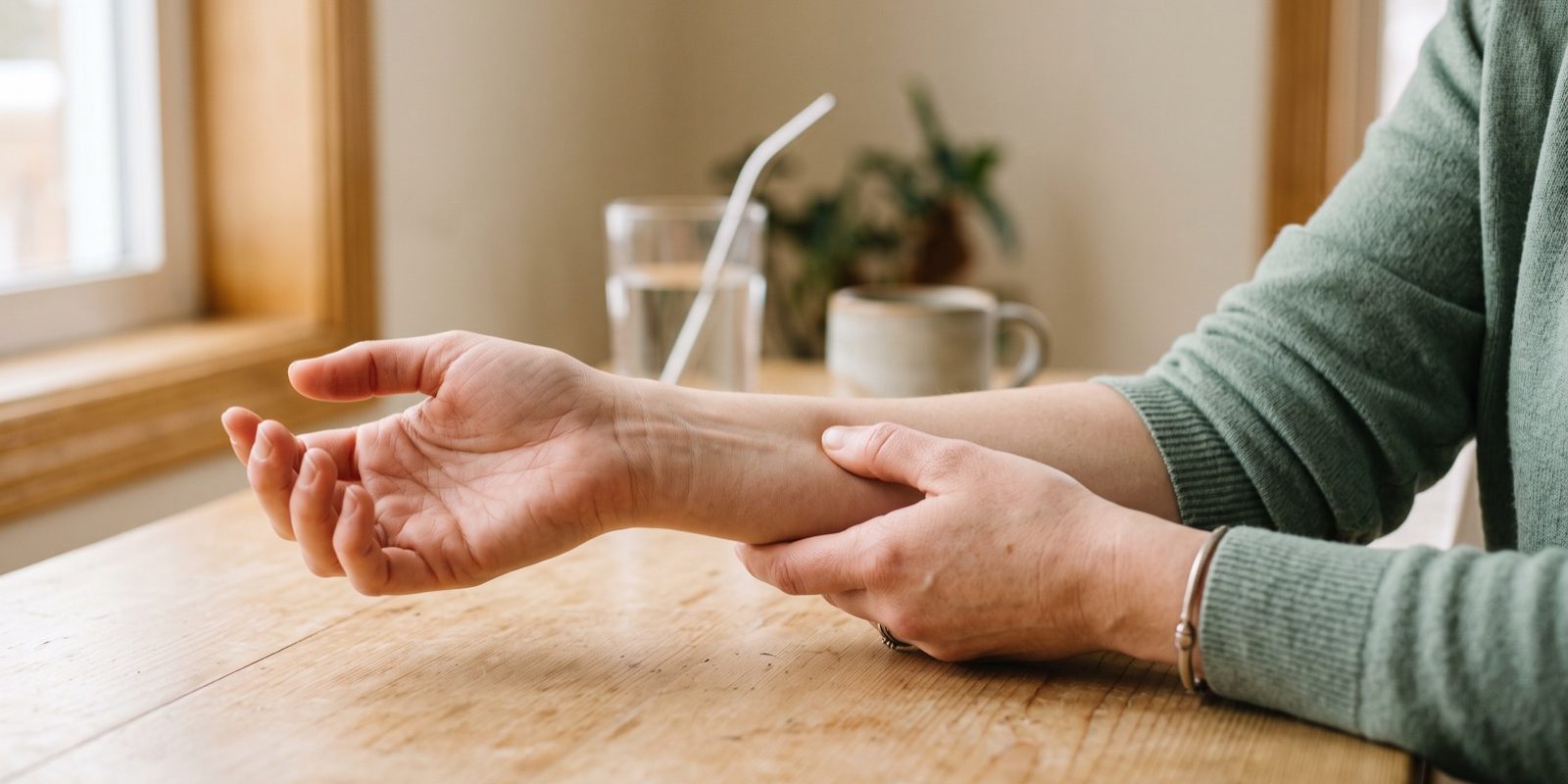
PC6 sits on the inner forearm, three finger-widths (about 2 cun) above the wrist crease, in the groove between the two central tendons — make a fist and the tendons stand out. This is the PC6 pressure point nausea research keeps returning to, and exactly where travel wristbands place their stud. Press steadily for 30 to 60 seconds per arm, breathing slowly; for travel, a wristband can hold gentle pressure for you.
ST36 — Zusanli 足三里: the digestion and vitality point
ST36 sits on the front of the lower leg, four finger-widths (about 3 cun) below the lower edge of the kneecap, one finger-width toward the outside of the shinbone — just lateral to the bone’s crest. Rest your palm on your kneecap, fingers pointing down the shin: the point lies where your little finger lands, just off the bone. Zusanli is a workhorse of traditional practice — the benefits attributed to it in TCM span digestion and general vitality. Firm thumb pressure or slow circles, about a minute per leg.
CV12 — Zhongwan 中脘: the gentle point over the stomach
Zhongwan sits on the midline of the upper abdomen, halfway between the belly button and the lower tip of the breastbone — about four finger-widths above the navel. In TCM it is the Stomach’s own collecting point — so the touch is gentle only: light circles with a flat palm or soft fingertips, ideally not right after a large meal. Skip Zhongwan during pregnancy and on a very full stomach, and never press hard into the abdomen.
When do people actually reach for these points?
Four everyday situations: heavy meals, queasy travel, pre-event nerves and sluggish stretches.
- Post-meal heaviness and bloating. Richmond eats well — a long dim sum sitting will do it. ST36 afterwards, then gentle Zhongwan once the stretched-full feeling eases, is the traditional pairing.
- Travel and motion queasiness. PC6 is the travel point — ferry crossings, long flights out of YVR, winding drives. Press it, or wear a band, before you feel sick rather than after.
- A nervous stomach. Presentations, exams, interviews: PC6 plus slow breathing gives your hands something useful to do while you settle.
- General digestive sluggishness. A daily minute of ST36 per leg is a simple habit; if a sluggish stretch turns into weeks, that is a family-doctor conversation.
What does the evidence say about these three points?
Unevenly: PC6 for nausea has genuine trial support; ST36 and Zhongwan rest mainly on traditional use. PC6 has been tested in controlled trials for motion sickness, post-operative nausea — a fixture of mainstream reviews of nausea care after surgery — and chemotherapy-related nausea, always alongside standard anti-nausea medication, never instead of it. The wristband studies, including the familiar Sea-Band type, are part of this record. Read honestly, results vary and the benefit is modest where found — fair value for a free, low-risk habit. PC6 is also generally considered safe in pregnancy, unlike LI4 on the hand, and has been studied for morning sickness — pregnant readers should still check with their midwife or doctor before any self-care.
ST36 and Zhongwan carry a different weight: centuries of continuous use, plus — for ST36 — modern research mostly on needling or electrical stimulation for conditions such as functional dyspepsia, not simple finger pressure. Trials of self-acupressure here are limited; I teach them because they are safe, free and coherent within TCM. The fair summary for all three: comfort tools, not treatment.
When should you see a doctor instead of pressing points?
Whenever a digestive symptom is persistent, severe, or new and unexplained — the list below needs a physician, not a pressure point.
Red flags — see a doctor promptly if you notice any of these:
- Persistent or repeated vomiting
- Blood in vomit or stool, or black, tarry stools
- Severe or worsening abdominal pain
- Unintended weight loss
- Difficulty swallowing
- A new, persistent change in bowel habits — especially over age 50
- Yellowing of the skin or eyes (jaundice)
These need a diagnosis, not acupressure. This article is general information, not medical advice. Unsure? Call HealthLink BC at 811.
Ordinary post-meal heaviness is exactly that — but self-care should never delay a diagnosis.
How does our Richmond clinic approach digestive complaints?
In a set order: medical assessment first for anything persistent, then comfort support alongside it.
In the acupuncture room — Mandy Tam, R.Ac
When someone books an acupuncture visit about digestion, the appointment starts with questions, not needles: how meals sit, when symptoms show up, what stress and sleep look like, what your doctor has found. A TCM assessment follows, then fine, sterile needles at points chosen for your presentation — often including ST36 and PC6 — and you leave with a home routine set up. I keep expectations honest: many patients say sessions leave them settled and meals sitting easier; some notice little change; nobody hears promises. Acupuncture can support comfort; diagnosing and treating digestive disease stays with your physician.
The stress–gut–tension loop — Dave Tam, RMT (Director)
Dave Tam, RMT, our clinic director, watches the same story from the massage table: a stressed nervous system shifts resources away from digestion, an uncomfortable gut feeds tension back — braced shoulders, clenched jaw, shallow breathing — and the loop tightens. He is careful about claims: massage therapy does not treat digestive disease. What registered massage therapy offers is down-regulation — an unhurried hour of rest-and-digest — and with slow breathing at home, patients often say evenings feel easier.
One rule sits above both rooms: persistent digestive issues go to your family doctor first. We complement medical care, never replace it — the same order applies across the conditions we support.
What else do Richmond patients ask about these points?
Short answers to the questions we hear at the front desk.
Where is the PC6 nausea point?
On the inner forearm, three finger-widths (about 2 cun) above the wrist crease, in the groove between the two central tendons — make a fist and press between them, 30 to 60 seconds per arm.
Do motion sickness wristbands press a real acupressure point?
Yes — the stud sits on PC6, and the wristband trials lean modestly positive. Position it carefully; in the wrong spot it is just a bracelet.
Is PC6 safe to use for morning sickness in pregnancy?
The point itself is generally considered safe in pregnancy — unlike LI4, which traditional practice avoids — and has been studied for pregnancy nausea. Clear any self-care with your midwife or doctor first.
What is a good pressure point for bloating after a big meal?
Many people use ST36 first, then gentle Zhongwan circles once the fullness eases — never right after a large meal. An easy walk helps too.
How hard and how often should I press?
Firm but comfortable on PC6 and ST36 — a dull ache is fine, sharp pain means ease off — and always light on Zhongwan. A few short rounds a day is plenty.
Can acupressure treat IBS, reflux or another diagnosed condition?
No — these are comfort tools, not treatment. A diagnosed condition belongs with your physician; some patients use it alongside that care for daily comfort.
What is the difference between acupressure and acupuncture?
Acupressure is finger pressure you apply yourself; acupuncture uses fine, sterile, single-use needles placed by a registered acupuncturist — our guide to acupuncture and TCM techniques covers what a session involves.
Where can you learn these points hands-on in Richmond?
At Artemis Wellness Clinic in central Richmond — 5911 No. 3 Road #130, Richmond BC V6X 0K9, a three-minute walk from Brighouse SkyTrain station. Acupressure coaching is part of how we practise here in Richmond: book an acupuncture visit and you leave with the points marked, your technique checked and a routine matched to you. I see patients in English, Mandarin and Cantonese. Book online at artemis.janeapp.com or call 604-242-2233, and we will put all three points properly into your hands.