When wildfire smoke drifts into the Lower Mainland, Richmond’s air can change within hours — this summer’s advisories have at times pushed Metro Vancouver Air Quality Health Index (AQHI) readings to 9–10+, with elevated fine-particle (PM2.5) levels. Smoke season now returns most summers, so our team wrote this guide to practical wildfire smoke self-care Richmond residents can reuse whenever an advisory rolls in: three perspectives from one clinic — acupressure and TCM, massage therapy, and indoor movement — plus the public-health basics that come first. One honest note first: nothing we offer can undo smoke exposure — our role at Artemis Wellness Clinic is easing the tension, poor sleep and stress of smoky weeks.
Get medical care first — this article is not medical advice. Seek medical care now — call 911 if severe — for difficulty breathing, wheezing, chest pain or pressure, blue-tinged lips or face, worsening asthma or COPD symptoms, or concerning symptoms in an infant or during pregnancy. If you live with a heart or lung condition, follow the action plan your physician has given you.
What actually protects you during an air quality advisory?
The genuinely protective steps come from public-health guidance, not from any clinic.
- Check the AQHI before outdoor plans. The higher Metro Vancouver’s reading, the shorter and lighter your time outside should be.
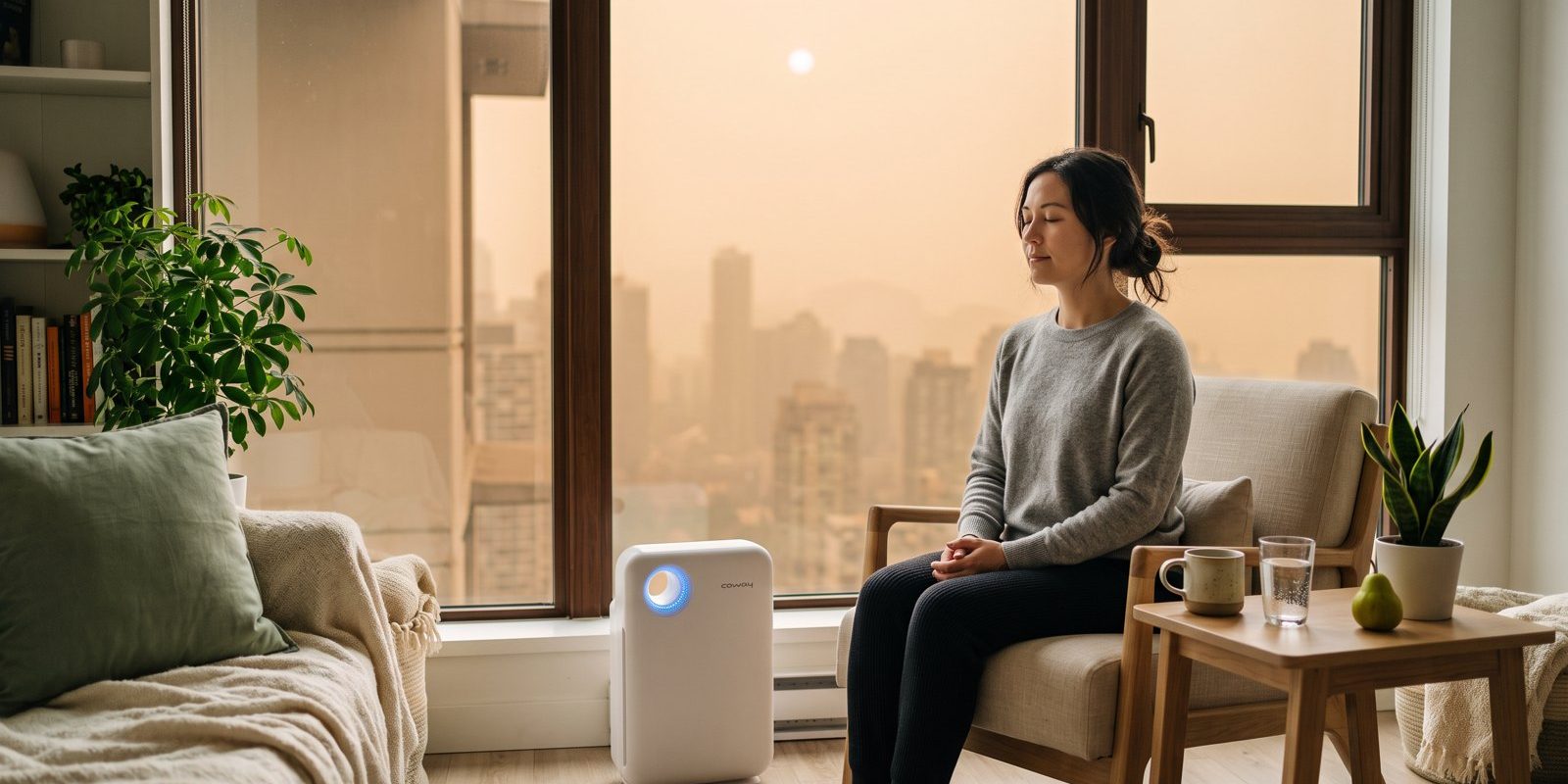
- Keep indoor air as clean as possible. Close windows and run a portable HEPA air cleaner if you have one — even one “cleaner-air room” for sleeping helps.
- Wear a well-fitted respirator for long stints outside. A well-sealed N95-type respirator filters fine smoke particles far better than a loose cloth mask.
- Limit strenuous outdoor exercise on high-AQHI days. Hard effort means breathing much more air — and much more of what is in it.
- Check in on people who feel smoke first. Seniors, babies and kids, pregnant people, and anyone with heart or lung conditions need earlier action and extra attention.
Can acupuncture or massage treat smoke exposure?
No. Acupuncture, acupressure and massage therapy cannot treat smoke inhalation, cannot clean the air you breathe, and cannot remove smoke or “toxins” from your lungs — be wary of anyone who claims otherwise. What smoky weeks do produce is tight shoulders, shallow breathing, restless sleep and a steady hum of stress — real discomfort, and the territory our team works in.
How does a multidisciplinary team plan for smoke season?
Each discipline contributes only what it is trained for — one combined plan: calming acupressure, hands-on care for overworked breathing muscles, and a safe indoor movement strategy.
TCM perspective — Mandy Tam, R.Ac
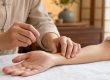
I’m Mandy Tam, R.Ac, this guide’s lead author (my practitioner profile). During advisories I teach three self-acupressure points. Use comfortable pressure — firm, never painful — breathe slowly, and stop if anything feels off.
- LI20 — Yingxiang 迎香, for nasal stuffiness. In the small groove beside each nostril: rest an index fingertip on each side and circle gently for 30–60 seconds.
- CV17 — Danzhong 膻中, calming. On the centre of the breastbone, level with the nipples: press softly with flat fingertips, or circle slowly, for one to two minutes, lengthening each exhale — many people find it eases that tight-chest feeling. If chest tightness is new, severe or painful, that is a medical symptom: see the red flags above, not a pressure point.
- LI4 — Hegu 合谷, for general tension. In the fleshy web between thumb and index finger: squeeze gently with the opposite thumb for 30–60 seconds per hand on headachy, jaw-clenched days. Traditional practice avoids stimulating LI4 during pregnancy — skip it if you are pregnant.
From the TCM food tradition, smoky weeks pair well with simple hydrating foods: ripe pear (fresh or gently stewed), warm honey water (never for babies under one), lily bulb (百合) simmered into a light soup or congee, and plenty of plain fluids. These are everyday groceries, not treatment — they will not protect your lungs — just comforting when your throat feels dry.
When a smoky stretch leaves you wound up and sleeping badly, acupuncture at our Richmond clinic may help you settle — many patients book in for exactly this. Our guide to acupuncture for stress and burnout explains what sessions look like.
RMT perspective — Dave Tam, RMT (Director)
When the air is bad, almost everyone breathes differently, observes our director Dave Tam, RMT: shallower, higher in the chest, shoulders creeping up, posture folded over indoor screens. The accessory breathing muscles — scalenes along the neck, pecs, upper traps, the small muscles between the ribs — end up overworked and tight, feeding neck ache, headaches and that can’t-get-a-full-breath feeling. Registered massage therapy does nothing to the smoke, but it can do a great deal for this pattern, easing those muscles so breathing feels freer and sleep comes easier.
Two home basics between visits:
- Doorway pec stretch. Forearms on the door frame, elbows near shoulder height, step gently through until you feel a comfortable stretch across the chest. Hold 20–30 seconds, two or three times a day — mild stretch, never pain.
- Slow diaphragmatic breathing. Sit tall or lie down, one hand on your belly. Inhale slowly through the nose so the belly rises; exhale even more slowly and let the shoulders drop. Three to five minutes, once or twice a day.
Indoor movement — kinesiology and active rehab
On advisory days, take workouts indoors and turn the intensity down. Swap the outdoor run for an easier indoor session, keep effort below usual, and break up long sitting with hourly mobility breaks — shoulder rolls, gentle upper-back rotations, a slow lap of the room. If smoke has derailed a rehab routine, our kinesiology and active rehab service can build an indoor plan around your space, equipment and current stage so you keep momentum.
What else do Richmond patients ask during smoke season?
These are the questions we hear most, answered directly.
Can acupuncture treat smoke inhalation?
No. Acupuncture cannot treat smoke inhalation, filter the air you breathe or remove smoke from your lungs. It may help with the tension, restless sleep and stress of a smoky week — if you are struggling to breathe, seek medical care right away.
Does massage remove smoke particles from my body?
No — nothing a massage therapist does changes what you have inhaled. Massage works on the neck, chest and shoulder muscles that tighten after days of shallow breathing and hunching, so breathing feels more comfortable — the air itself is unchanged.
Which acupressure point can I try for a stuffy nose?
LI20 (Yingxiang 迎香), in the small groove beside each nostril — gentle fingertip circles for 30–60 seconds while breathing slowly. A comfort measure only — it does not filter smoke or treat any condition.
Is it safe to exercise outdoors during an air quality advisory?
Check the AQHI first. On high days, public-health guidance is to limit strenuous outdoor exercise: move workouts indoors, keep intensity easier than usual, and follow your physician’s advice if you have a heart or lung condition.
Can I use LI4 acupressure while pregnant?
Traditional practice avoids stimulating LI4 (Hegu 合谷) during pregnancy, so skip that point. Gentle pressure at LI20 or CV17 is comfortable instead; if unsure about any self-care in pregnancy, ask your maternity care provider.
Will pear or lily bulb soup protect my lungs from smoke?
No. In the TCM food tradition, pear, lily bulb (百合) and warm fluids are comforting everyday foods for a dry, scratchy-feeling throat — nothing more. Protection comes from cleaner indoor air, a respirator outdoors and limiting exertion on high-AQHI days.
Is smoke-season care covered by extended health plans?
Many plans include registered massage therapy, acupuncture and kinesiology, and we offer direct billing to Pacific Blue Cross, Sun Life, Manulife, Canada Life, Green Shield and 20+ insurers through TELUS Health, plus ICBC and WorkSafeBC claims. Coverage depends on your individual plan, so check your policy details.
When should I skip self-care and see a doctor instead?
Immediately, if any red flag appears: difficulty breathing, wheezing, chest pain, blue-tinged lips, worsening asthma or COPD symptoms, or concerning symptoms in an infant or during pregnancy — call 911 if severe. With heart or lung disease, follow your physician’s action plan first.
How do you book smoke-season support in Richmond?
Book online at artemis.janeapp.com or call 604-242-2233. Artemis Wellness Clinic is at 5911 No. 3 Road #130, Richmond BC V6X 0K9 — a three-minute walk from Brighouse SkyTrain, keeping smoky-day walking short. Six disciplines work under one roof: RMT massage, acupuncture and TCM, physiotherapy, chiropractic, kinesiology and osteopathy. If smoke season has your shoulders up around your ears and your sleep in pieces, book with our team — we cannot change the air outside, but we can help you carry these weeks with less tension and more rest.