Cold Weather and Aching Joints: What’s Actually Going On, and What Helps
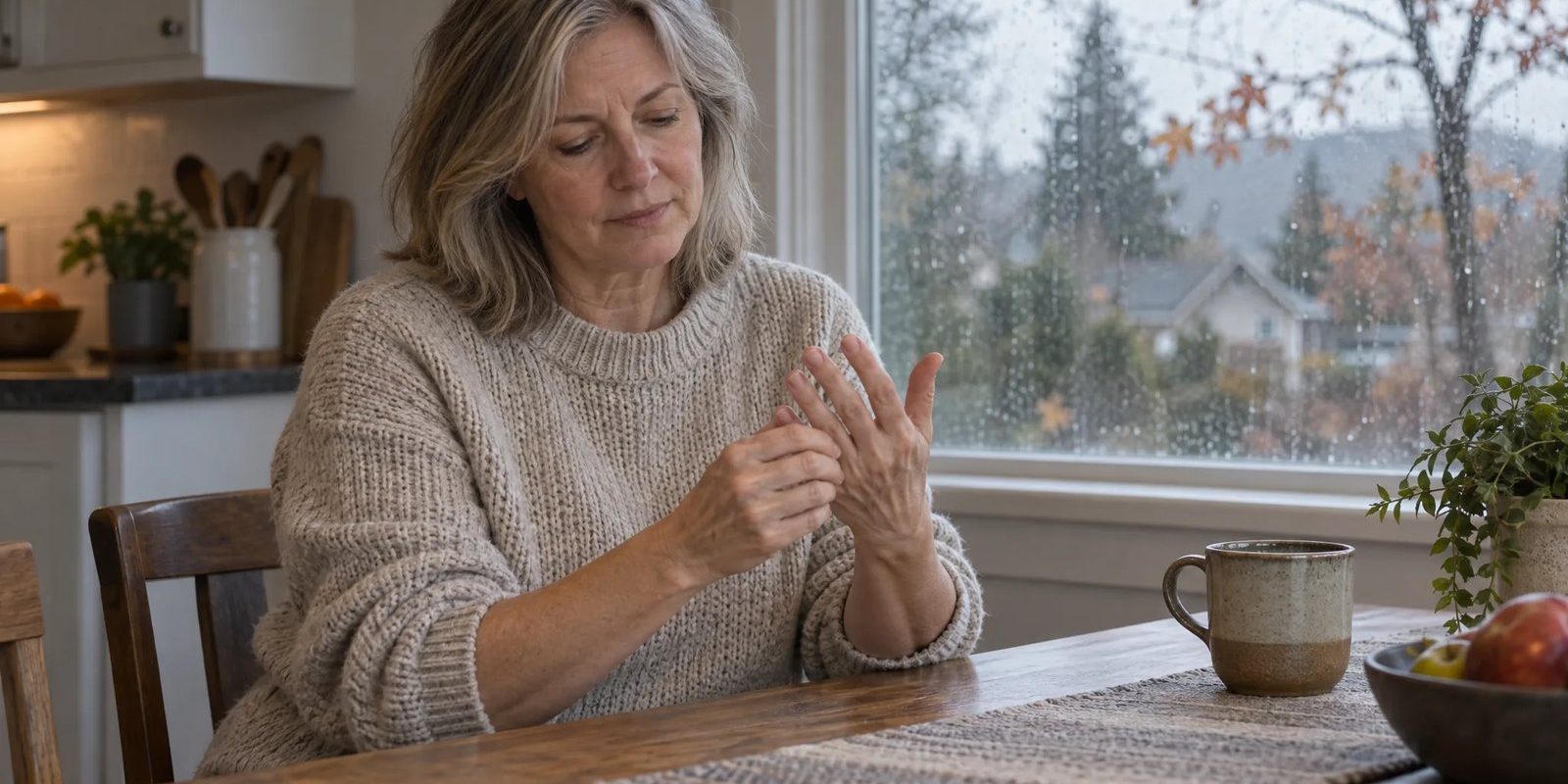
As the weather turns cool and wet across Metro Vancouver, the same conversation starts in my treatment room almost daily. Someone rolls a shoulder and says: “The moment the rain came back, everything started aching again.” Knees on the stairs. Hips in the morning. An old injury that stayed quiet all summer and has suddenly remembered itself.
I’m Dave Tam, RMT, a Registered Massage Therapist and the Clinic Director at Artemis Wellness Clinic in Richmond. I want to give you an honest answer here, because the honest answer is more useful than the tidy one.
Does cold, damp weather actually cause joint pain?
Here is the part most articles skip: the research linking weather and joint pain is genuinely mixed.
Large studies tracking people’s pain alongside temperature, humidity and barometric pressure have often found little consistent association: a cold snap or a falling barometer did not reliably predict a worse pain day. Other studies report small associations, and a great many patients — observant adults who know their own bodies — will tell you they feel the change coming before the clouds do.
So I will not tell you cold weather causes joint pain; the evidence does not support it. Nor will I tell you that what you notice every autumn is in your head. The season brings other changes we understand far better, and most of them you can influence.
Why do so many people ache more as the weather turns?
We move less without deciding to. Daylight shrinks, the rain settles in, and evening walks disappear. Movement is what keeps the tissue around a joint supple.
Muscles guard in the cold. Cold tissue is stiffer, and we brace — shoulders creeping toward the ears, grip hardening on a cold steering wheel. Weeks of that and the muscles around a joint complain.
Outdoor activity falls off, and conditioning follows. The July walker who managed the dyke four times a week may be out once a fortnight by late autumn. Strength fades quietly, and joints notice first.
Less daylight changes sleep and mood. Shorter days shift sleep quality and mood often dips with them. Poor sleep lowers pain tolerance, a well-established relationship. The same knee, on less sleep, simply hurts more.
We warm up less. Nobody does leg swings in a cold carport, so we go from the car straight into hauling groceries, on tissue that needed a longer runway.
None of that requires a barometer to explain.
What does massage therapy notice at this time of year?
In my experience, the autumn pattern is rarely a new injury. It is usually a familiar area that has quietly lost tolerance: a low back that sat more than it walked, a neck hunched against wind and rain.
Hands-on work may help by settling the protective tension in the muscles around a sore joint, so the area feels more willing to move. Registered massage therapy is not a treatment for the condition inside the joint, and I say so plainly. Our conditions we treat page covers what we see most often.
How does acupuncture look at cold and damp weather?
My colleague Mandy Tam, R.Ac, a Registered Acupuncturist here, sees the same complaints from a different angle:
“In traditional Chinese medicine we describe how symptoms behave rather than naming a disease. Aching that worsens in cold, wet weather, feels heavy or dull and eases with warmth is called a cold and damp pattern. That is a description, not a medical diagnosis, and it does not replace one. It points toward warmth and movement rather than rest.
“Acupuncture may help some people manage this seasonal aching, and many patients find a session leaves them looser and calmer, though results vary. Two points to press at home:
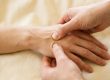
“LI4 (Hegu) sits on the back of the hand, in the web between thumb and index finger. Find the thumb side of the second metacarpal — the second hand bone — at about its midpoint, where the muscle bunches as you press thumb and index finger together. Press firmly for 30 to 60 seconds while breathing slowly. LI4 is traditionally avoided during pregnancy, so if you are pregnant or may be, leave it alone and ask your maternity care provider.
“ST36 (Zusanli) sits four finger-widths below the lower edge of the kneecap, one finger-width toward the outside of the shin bone, in the muscle that firms up as you pull your foot toward you. Rub in small circles for a minute on each leg.
“Steady, comfortable pressure, never force. On scope: we provide acupuncture only and do not prescribe herbal medicine.”
Our acupressure self-care guide covers pressure and timing.
Can gentle joint mobility work help stiff mornings?
Ethan Choi, R.Ac, R.TCMP, DOMP, works here in acupuncture and osteopathic manual therapy. His perspective:
“When people arrive stiff in the autumn, I am less interested in the sore joint than in how the rest of the body shares the load. If the mid-back and ribs have gone rigid, the shoulder does more than its share. If a hip has lost rotation, the knee absorbs the difference. Slow, low-force joint mobility work gives an area back a little of its range, so ordinary movement feels less like work. Everyone responds differently, so I pair hands-on work with two or three small movements to do at home.”
Our osteopathy page explains more.
Where do physiotherapy and kinesiology come in?
When aching is tied to strength and load tolerance — knees that object on stairs, a shoulder that fades overhead — physiotherapy and kinesiology are often where lasting progress is built. A graded plan you can carry out indoors through the grey months does more over a season than any single visit.
What actually helps once the weather turns?
Keep the joint warm, not just the room. A warm core with bare knees and cold hands is a common autumn mistake. Thin layers under your trousers, sleeves over the elbows, gloves earlier than feels necessary.
Warm up longer than you think you need to. Five minutes often does in summer; in cold weather give it ten before a walk, a workout or yard work, and build the pace slowly.
Heat before, cool after — comfort tools, not treatments. A warm shower or heat pack before activity may help an area feel more willing to move. Something cool afterwards can settle an irritated or puffy joint. Never apply heat to a joint that is hot, red and swollen.
Move it indoors instead of cancelling it. Mall laps, a community centre pool, your building’s stairwell, ten-minute blocks through the day.
Do not shut your activity down until spring. Quitting movement altogether turns a seasonal ache into a deconditioned joint by February.
Guard your sleep and your daylight. Get outside in daylight even under cloud, and keep a steady bedtime.
When should joint pain be checked by a physician?
Some joint symptoms are not ordinary seasonal aching and need a physician promptly:
- a hot, swollen, red joint
- a joint that suddenly cannot bear weight
- joint pain together with a fever
- significant swelling you cannot account for
- pain following a fall or other injury
- joint symptoms alongside unexplained weight loss
If you are unsure, HealthLink BC at 811 offers free advice from a registered nurse at any hour. This article is general information, not medical advice.
This article is about ordinary seasonal aching, not a substitute for the diagnosis of osteoarthritis, inflammatory arthritis, gout or any other condition. What we offer complements your medical care, does not replace it.
Booking with us in Richmond
Massage therapy, acupuncture, osteopathic manual therapy, physiotherapy and kinesiology sit under one roof here, so I can walk down the hall and ask Mandy or Ethan what they see in the same patient, and the plan can change as your season does.
Artemis Wellness Clinic
5911 No. 3 Road #130, Richmond, BC V6X 0K9
A three-minute walk from Brighouse SkyTrain station
Phone: 604-242-2233
Online booking: artemis.janeapp.com
Many extended health plans include some of these services, but coverage depends on your plan and insurer. Check your benefits before booking — we cannot confirm what any plan will reimburse.
Frequently Asked Questions About Cold Weather and Joint Pain
Does cold weather cause arthritis?
No. There is no good evidence that a cool, damp climate causes arthritis. The open question is whether weather influences how existing symptoms feel day to day, and that research is mixed.
Why do my old injuries ache more in the autumn?
An old injury often leaves an area with slightly less tolerance than it once had. Autumn quietly reduces the movement and warmth it had all summer, so the margin gets thin.
Should I use heat or ice on an aching joint?
Heat before activity to help an area feel looser, something cool afterwards if the joint feels irritated. Both are comfort tools, not treatments. Never apply heat to a joint that is hot, red and swollen.
Can massage therapy help joint pain that comes with cold weather?
It may help with the muscular tension and reduced movement that build up around a sore joint, though it is not a treatment for the joint condition itself. Judge it by whether you move and sleep better.
Do I need a doctor’s referral to book?
In BC you do not need a physician’s referral to see a Registered Massage Therapist, a Registered Acupuncturist or a physiotherapist. Some extended health plans ask for one before they reimburse, so check your policy wording.
Is it better to rest the joint until spring?
Generally, no. Complete rest tends to leave a seasonal ache worse by the time the weather improves, because strength and movement tolerance fall away. Scaling activity down and moving it indoors is more useful. Sharp or worsening pain is different — have it assessed.